

Description
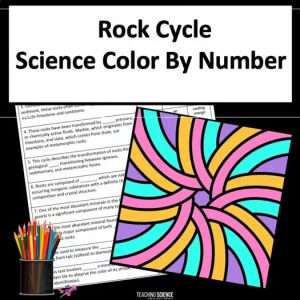
Do you want to review atoms and molecules? Do you need a fast finisher activity for state testing? Students will love reviewing concepts related to atoms and molecules, and they will enjoy this coloring activity. Students fill in the blanks to find the answers and use the codes to color the coloring sheet.
Your students will have fun with this Color by Code Worksheet!
Each sentence in this Color By Number activity comes with a color code; students will color the design using the sentence numbers to help them. Self-grading! Use the colored picture to check their worksheet. Just PRINT AND GO!
What does this color code activity include?
- Two pages of fill-in-the-blank sentences
- 20 questions
- 1 coloring page
Benefits of this Resource
- Review for atoms and molecules
- quiet activity for after testing
- no-prep and no grading
Standards Addressed:
NGSS MS-PS1-1. Develop models to describe the atomic composition of simple molecules and extended structures.[Clarification Statement: Emphasis is on developing models of molecules that vary in complexity. Examples of simple molecules could include ammonia and methanol. Examples of extended structures could include sodium chloride or diamonds. Examples of molecular-level models could include drawings, 3D ball and stick structures, or computer representations showing different molecules with different types of atoms.][Assessment Boundary: Assessment does not include valence electrons and bonding energy, discussing the ionic nature of subunits of complex structures, or a complete description of all individual atoms in a complex molecule or extended structure is not required.] and
Utah SEEd Standard 6.2.1
Develop models to show that molecules are made of different kinds, proportions, and quantities of atoms. Emphasize understanding that there are differences between atoms and molecules and that certain combinations of atoms form specific molecules. Examples of simple molecules could include water (H2O), atmospheric oxygen (O2), and carbon dioxide (CO2). (PS1.A)
Utah SEEd 8.1.1 Develop a model to describe the scale and proportion of atoms and molecules. Emphasize developing atomic models of elements and their numbers of protons, neutrons, and electrons, as well as models of simple molecules. Topics like valence electrons, bond energy, ionic complexes, ions, and isotopes will be introduced at the high school level. (PS1.A)