
Description
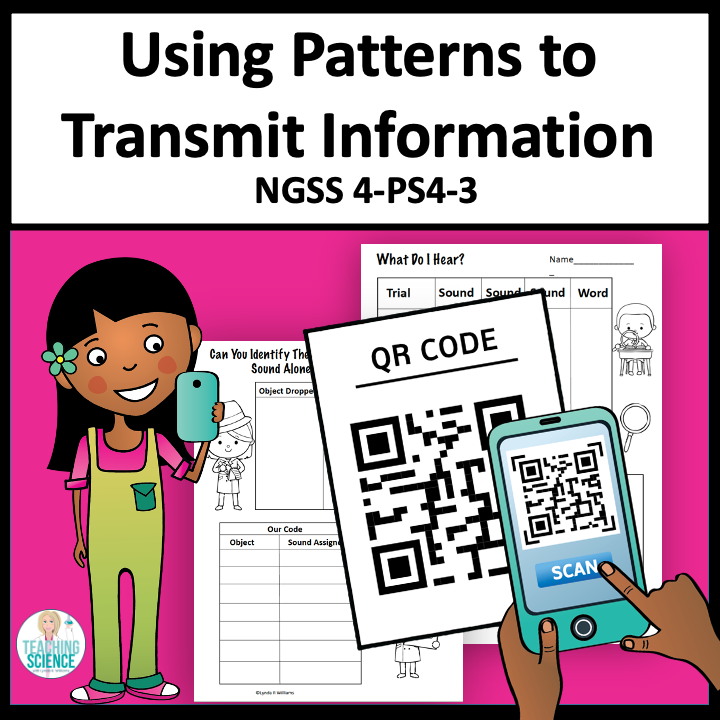
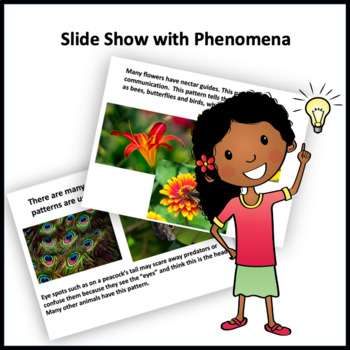
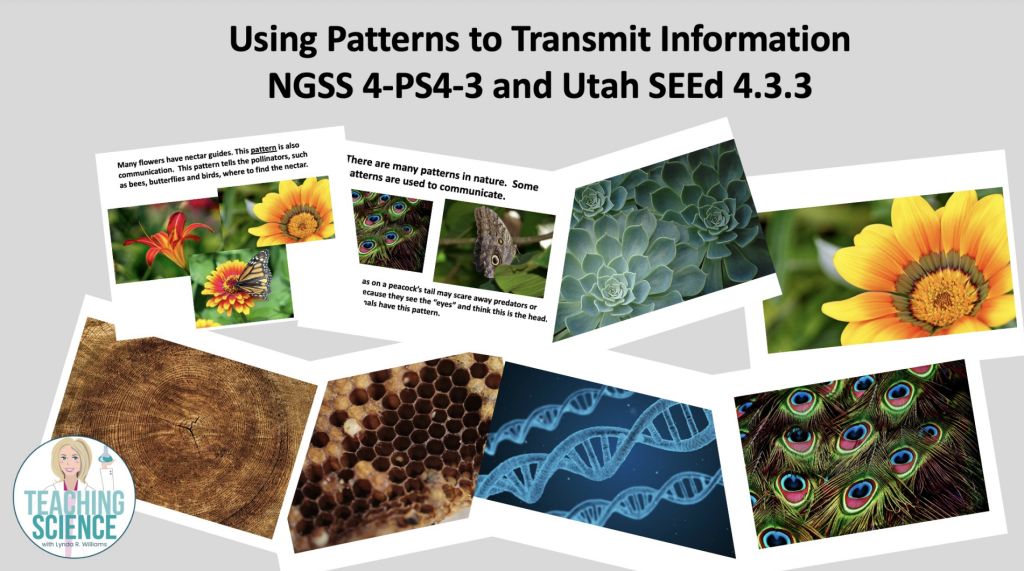
Students will use patterns to communicate with each other in this fun and engaging unit! Students will design a solution for transmitting information by using patterns. Students will generate and compare multiple solutions that use patterns to transfer information. The unit begins by looking at the phenomena of patterns in nature. Students will communicate using patterns with easy-to-find materials. ✅
Teachers Love this Integrated Science Unit!❤️❤️❤️
Kristen ⭐️ ⭐️ ⭐️ ⭐️ ⭐️ Extremely Satisfied
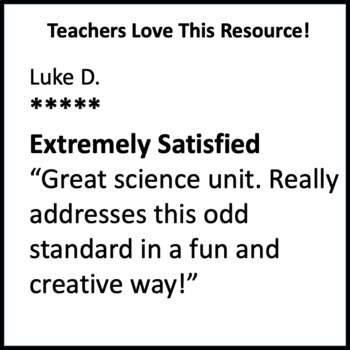
Students loved the QR code activity and also loved the activity with sound patterns. They wanted to keep sending messages to each other all day. This is a creative way to teach this concept and tricky standard!
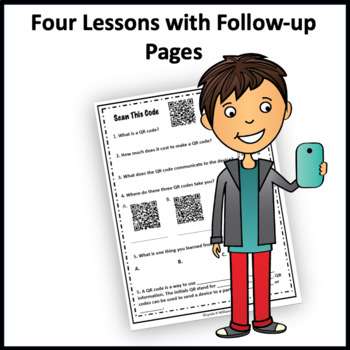
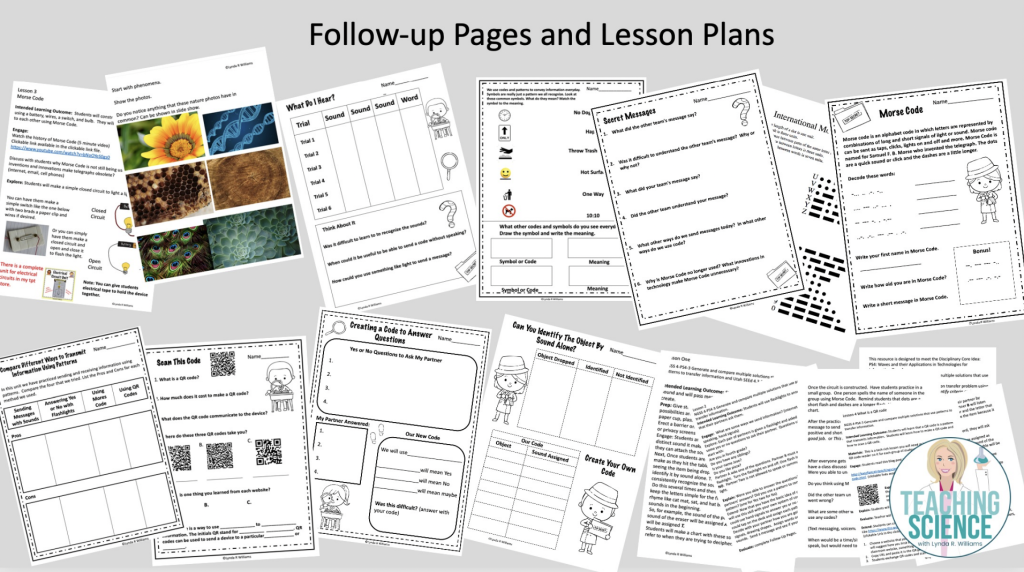
This resource includes four exciting hands-on activities to address this tricky standard.
NGSS 4-PS4-3 Generate and compare multiple solutions that use patterns to transfer information.
NGSS 4-PS4-3 Waves and their Applications in Technologies for Information Transfer.
Utah SEEd 4.3.3 Design a solution to an information transfer problem using wave patterns. Define the problem, identify criteria and constraints, develop possible solutions using models, analyze data from testing solutions, and propose modifications for optimizing a solution. Examples could include using light to transmit a message in Morse code or using lenses and mirrors to see objects that are far away. (PS4.C, ETS1.A, ETS1.B, ETS1.C)
Students will learn four different methods for transmitting information by using patterns and then they will compare the four.
Students will learn about Morse Code, how it works, and how they can use it to send a message. They will also consider why it is no longer being used. Students will create their own simple telegraph machine using a simple electrical circuit and use it to send and receive messages. Materials needed for this include a battery, electrical wire, electrical tape, and a light bulb.
Students will also learn about QR Codes by using QR Codes. For this lesson access to the internet and some type of device with a FREE QR code reader will be needed. One for each group of students is plenty.
The other two lessons use simple household materials or school supplies like an eraser, pencil, flashlight, etc.
You can read more about this resource on my blog post!