
Description
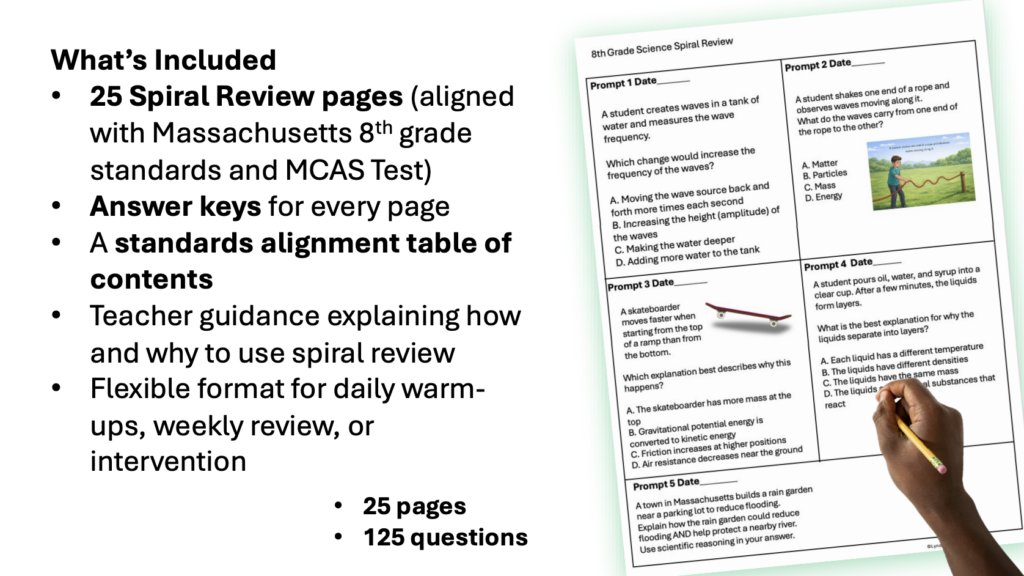
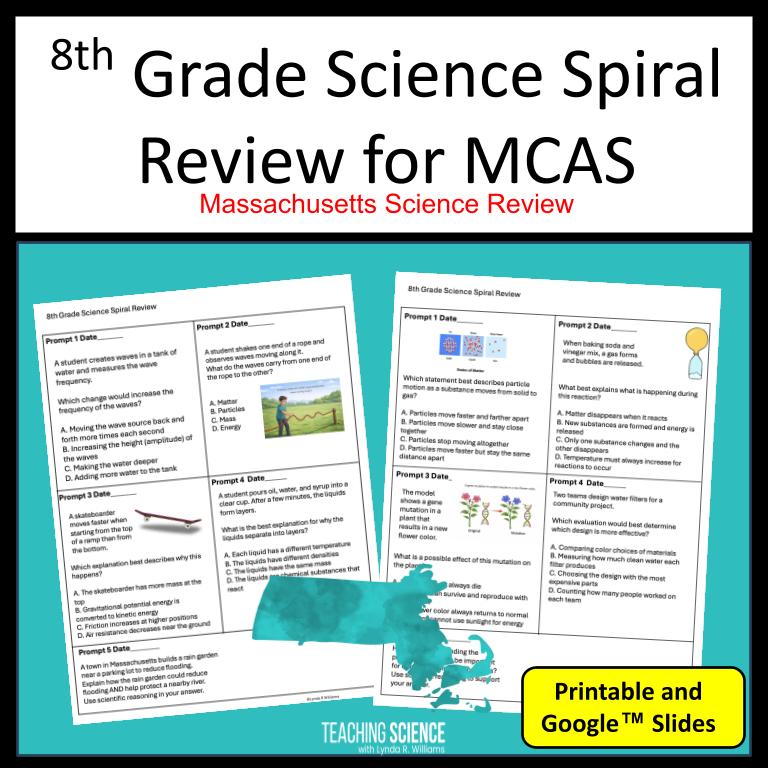
Looking for an easy, consistent way to review 8th-grade science all year long while building the skills students need for MCAS success? This 8th Grade MCAS Daily Science Spiral Review was designed to support long-term learning through retrieval practice, spaced review, and interleaving—strategies backed by cognitive science research. Great for MCAS Test Prep!
Each page includes five mixed science prompts that combine content review + real MCAS-style thinking, including models, graphs, scientific reasoning, and engineering design.
✅ Low prep. High impact. Perfect for routine review.
✅ What’s Included
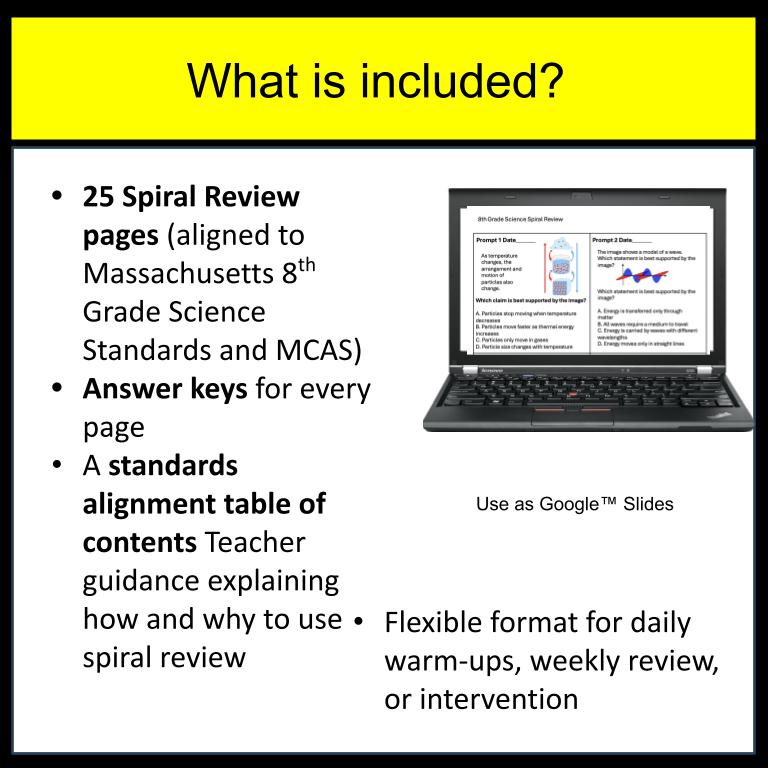
- 25 Spiral Review Student Pages (Printable PDF)
- 25 Digital Google Slides™ pages (students type directly into text boxes)
- Answer Key include
- 5 prompts per page (great for daily warm-ups or weekly review)
- Covers Physical, Earth, Life Science, and Engineering
🔬 Topics & Standards Covered (NGSS / MCAS-Aligned)
This spiral review includes standards-based practice across:
- Forces, Motion, Gravity, and Fields (MS-PS2, MS-ESS1)
- Energy Transfer: Kinetic & Potential (MS-PS3)
- Matter & Chemical Reactions (MS-PS1)
- Waves & Information Transfer (MS-PS4)
- Earth Systems, Climate, Human Impacts (MS-ESS2, MS-ESS3)
- Fossils, Natural Selection, Evolution (MS-LS4)
- Genetics & Inheritance (MS-LS3)
- Ecosystems & Energy Flow (MS-LS2)
- Engineering Design & Optimization (MS-ETS1)
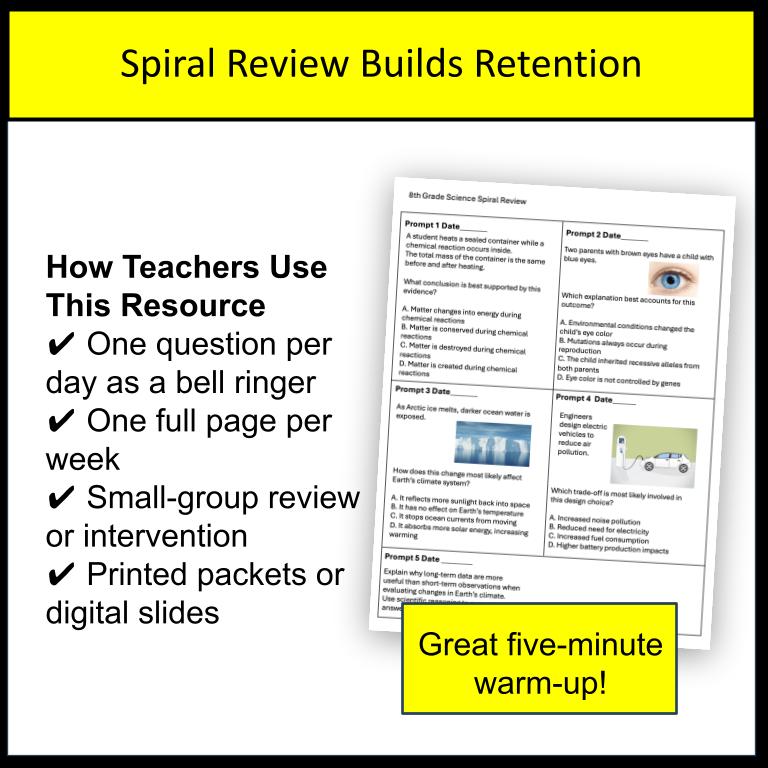
✅ Best Ways to Use This Resource
Perfect for:
- Daily warm-ups/bell ringers
- Exit tickets
- Small group review/intervention
- Homework
- Test prep rotations
- Quick weekly quizzes
- Science notebook work
- MCAS Test Prep
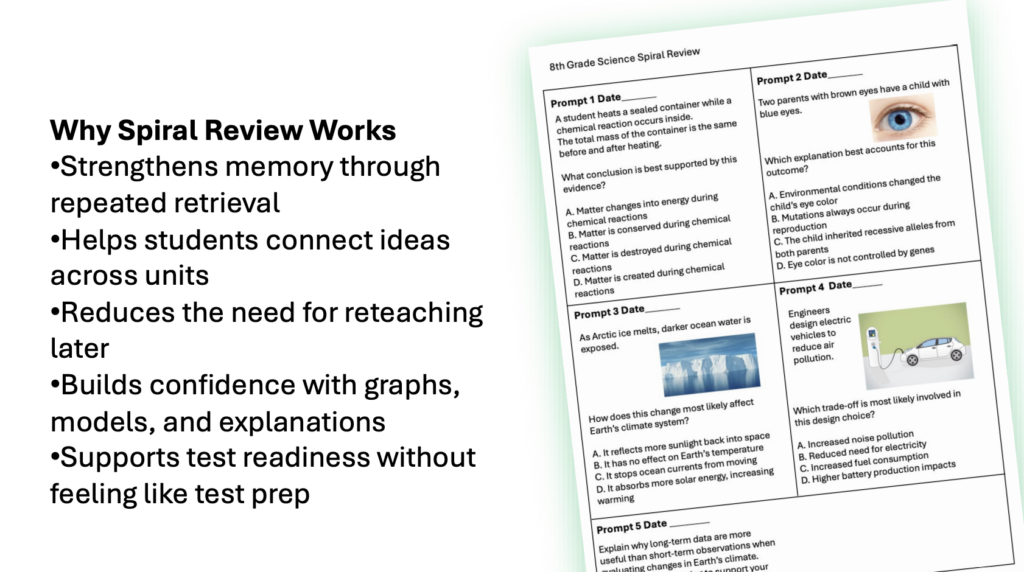
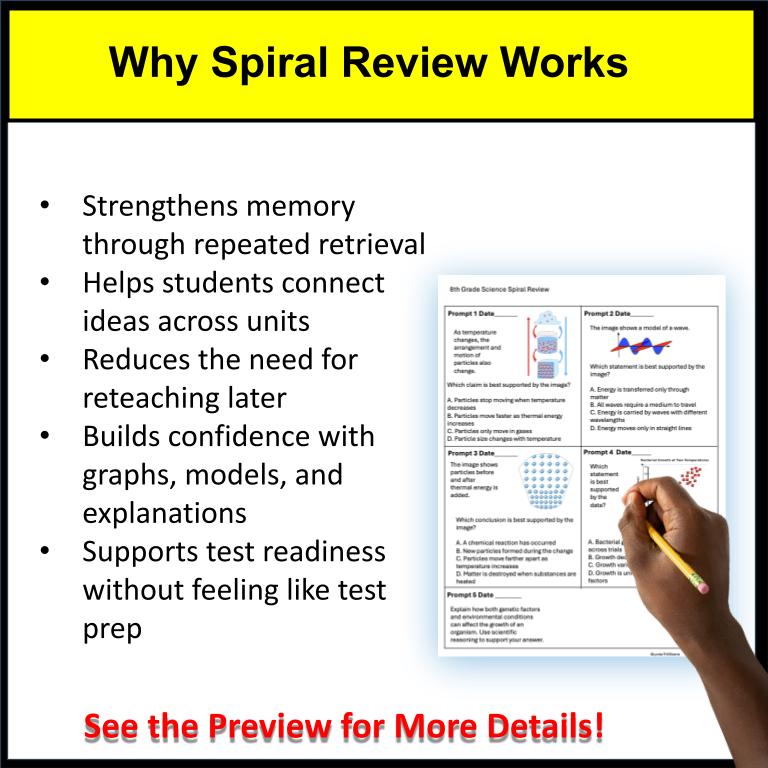
⭐ Why Teachers Love Spiral Review for MCAS Test Prep (Research-Based!)
Spiral review works because students:
✅ practice retrieval (strengthens memory)
✅ revisit concepts through spaced practice (improves long-term retention)
✅ work through mixed topics (interleaving) (builds flexible thinking)
✅ engage in short, low-stakes practice (boosts confidence + reduces test anxiety)
This format supports the exact skills students need for MCAS—analyzing data, explaining patterns, using models, and supporting claims with evidence.