Description
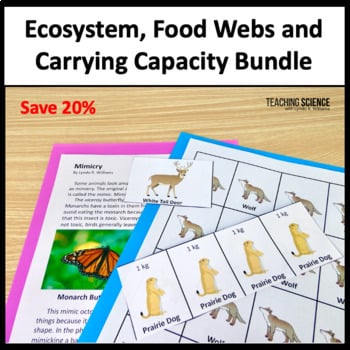
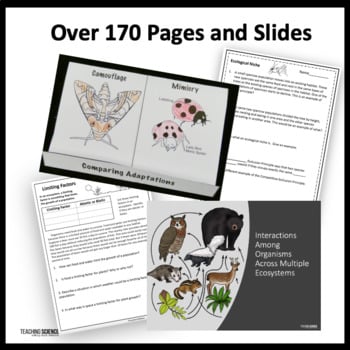
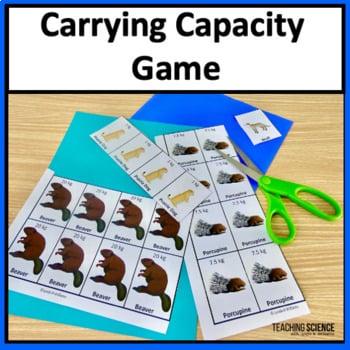
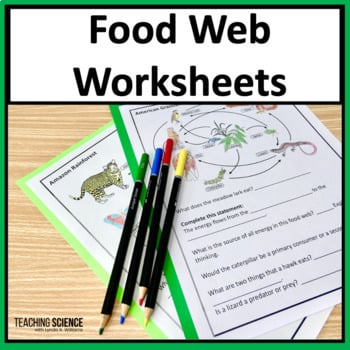
Engage your students with ecosystem interaction activities that build understanding of food webs, food chains, trophic levels, and carrying capacity. This resource aligns with middle school life science standards and helps students analyze energy flow, limiting factors, and organism relationships within ecosystems. Perfect for NGSS MS-LS2-1 through MS-LS2-4, these ready-to-use lessons make complex ecological concepts clear and engaging for students.
This Bundle Includes:
Teachers Love This Bundle!❤️❤️❤️
Ann ⭐️ ⭐️ ⭐️ ⭐️ ⭐️ Extremely Satisfied
Each of these activities was really good. This is a great bundle for the ecosystem/food chain, and my students enjoyed the activities.
Purchase together and save 20%.
This HUGE Unit is designed to address the Middle School Life Science Standards from the LS2 DCI, Ecosystems, Interactions, Energy, and Dynamics:
LS2.An Interdependent Relationship in Ecosystems
LS2.B Cycles of Matter and Energy Transfer in Ecosystems
LS2.C Ecosystem Dynamics, Functioning and Resilience
LS2.D Social Interactions and Group Behavior
This resource addresses the following standards:
NGSS MS LS2-1 Analyze and interpret data to provide evidence for the effects of resource availability on organisms and populations of organisms in an ecosystem.
NGSS MS-LS2-2
Construct an explanation that predicts patterns of interactions among organisms across multiple ecosystems.
NGSS MS-LS2-3. Develop a model to describe the cycling of matter and flow of energy among living and nonliving parts of an ecosystem. [Clarification Statement: Emphasis is on describing the conservation of matter and flow of energy into and out of various ecosystems, and on defining the boundaries of the system.
Utah SEEd 6.4.1
Analyze data to provide evidence for the effects of resource availability on organisms and populations in an ecosystem. Ask questions to predict how changes in resource availability affects organisms in those ecosystems. Examples could include water, food, and living space in Utah environments.
Utah SEEd 6.4.2
Construct an explanation that predicts patterns of interactions among organisms across multiple ecosystems. Emphasize consistent interactions in different environments such as competition, predation, and mutualism.
**This resource also aligns with Utah SEEd Standard 8.3.3
Ask questions to obtain, evaluate, and communicate information about how changes to an ecosystem affect the stability of cycling matter and the flow of energy among living and nonliving parts of an ecosystem. Emphasize describing the cycling of matter and flow of energy through the carbon cycle. (LS2.B, LS2.C)
Created by Lynda R. Williams
Teaching Science With Lynda
These resources are created by Lynda R. Williams at Teaching Science
Follow me and get news of my new resources. Each new resource is discounted by 50% for the first 24 hours!
Please look at some of my other resources for NGSS Middle School
Age of the Earth MS NGSS ESS1-4
Analyzing and Interpreting Data: Scale and Properties of Solar System MS ESS1-3
Weather and Climate Bundle for NGSS Middle School
* My resources are secure and not editable for copyright reasons.