
Description
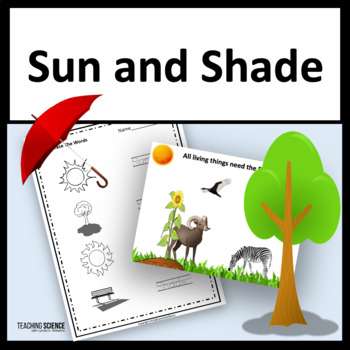
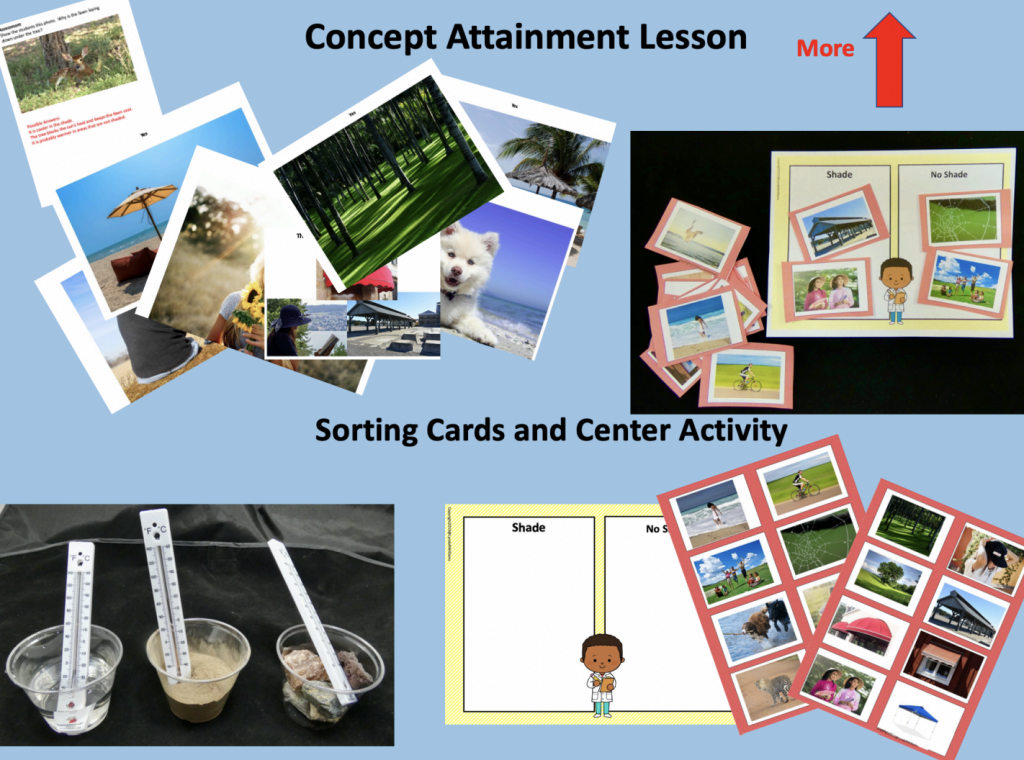
Students will learn about sunlight and shade in this kindergarten science unit for NGSS K-PS3-1 and K-PS3-2. Students will learn that the Sun heats Earth’s materials and that shade can reduce the warming effects of the Sun. Students will use engineering skills to create a shade structure. The lessons use phenomena. Also for Utah SEEd kindergarten.
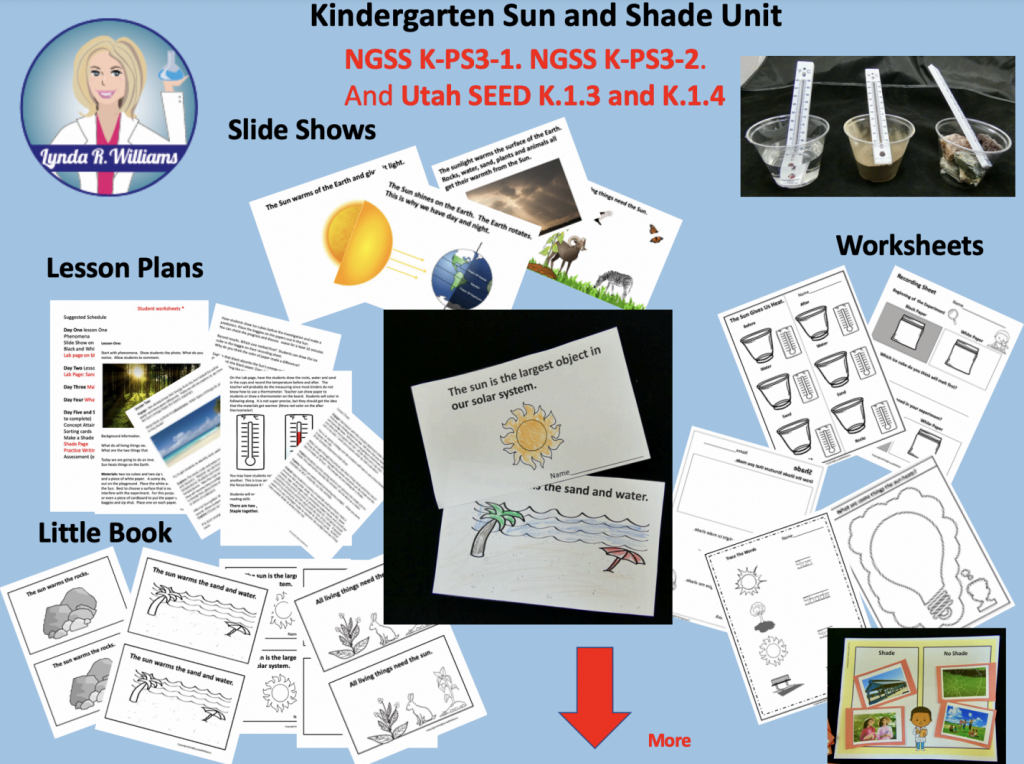
This resource includes:
- a hands-on engineering project
- lesson plans
- sorting cards for a center
- worksheets
- a little book to practice reading
Teachers Love this Integrated Science Unit!❤️❤️❤️
Tracey ⭐️ ⭐️ ⭐️ ⭐️ ⭐️ Extremely Satisfied
This is a great kinder unit for science. Fun activities that are appropriate for the age level and the students were learning!
Lynn ⭐️ ⭐️ ⭐️ ⭐️ ⭐️ Extremely Satisfied
My students loved reading and coloring the little book part of this resource! It was a great learning experience and addition to our science lesson for the day. Their little books will stay in their book bins so they can pull it out anytime.
This resource is aligned with the following standards:
NGSS K-PS3-1. Make observations to determine the effect of sunlight on the Earth’s surface. [Clarification Statement: Examples of Earth’s surface could include sand, soil, rocks, and water] [Assessment Boundary: Assessment of temperature is limited to relative measures such as warmer/cooler.]
K-PS3-2. Use tools and materials to design and build a structure that will reduce the warming effect of sunlight on an area.*
Also aligns with Utah SEEd
Standard K.1.3 Carry out an investigation using the five senses, to determine the effect of sunlight on different surfaces and materials. Examples could include measuring temperature, through touch or other methods, on natural and man-made materials in various locations throughout the day. (PS3.B) Standard K.1.4 Design a solution that will reduce the warming effect of sunlight on an area. Define the problem by asking questions and gathering information, convey designs through sketches, drawings, or physical models, and compare and test designs. (PS3.B, ETS1.A, ETS1.B, ETS1.C)
If you like this resource, check out my blog post on my resource on seasons and daylight!