If you’ve ever taught a lesson you swore students understood… only to watch that understanding vanish two weeks later, you’re not alone. Science builds year-long: vocabulary, models, labs, and core ideas stack on top of each other. That’s why spiral review is one of the simplest, most effective routines you can add—without rewriting your entire curriculum.
Spiral review isn’t “extra work.” It’s a smarter way to help students remember what matters.
What Is Spiral Review?
Spiral review is a short, consistent practice routine that revisits previously taught skills and concepts over time. Instead of teaching a topic once and moving on forever, students circle back repeatedly—just in small doses.
In a science classroom, that might look like:
- a 5-minute warm-up with mixed topics (matter + forces + ecosystems + graphs)
- quick “model-based” questions that ask students to explain patterns
- mini data analysis prompts that mirror state testing styles
The key is spacing and mixing: students practice old concepts while learning new ones.

Why Spiral Review Boosts Retention
Spiral review works because it lines up with what cognitive science tells us about memory.
Students remember better when practice is spaced out
When students revisit concepts over multiple days or weeks, the brain has to “rebuild” the memory each time—and that strengthens it. This is called spaced practice. It’s one reason cramming feels productive in the moment but fades fast.
Retrieval practice beats rereading
Spiral review forces students to pull information from memory instead of recognizing it on a page. That “effortful recall” is what strengthens long-term learning. Even quick, low-stakes prompts help students retain content more effectively than simply reviewing notes.
Mixing topics improves transfer
Spiral review is usually interleaved (mixed), meaning students practice different types of problems together. That helps them learn when to use a concept—not just how. In science, this matters because tests and real-world problems don’t announce: “This is a forces question!”
What the Research Says (Teacher-Friendly Version)
You don’t need to be a researcher to see the results—but it’s helpful to know the “why” behind it.
Research consistently supports:
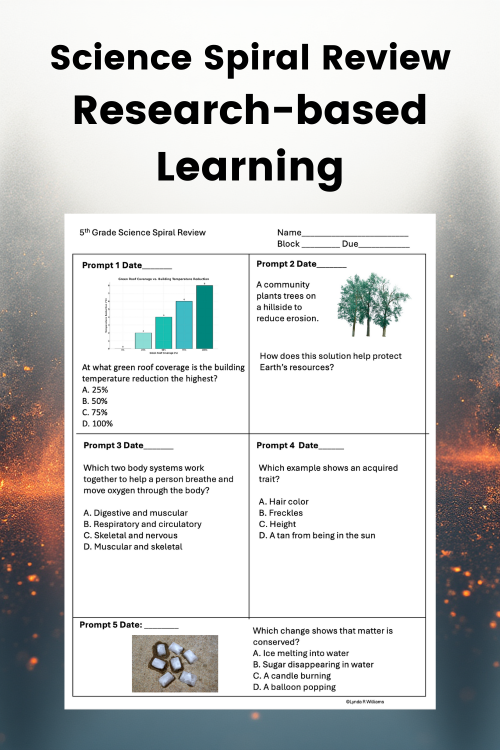
- Spaced practice improves long-term retention more than massed practice (doing it all at once).
- Retrieval practice improves memory and test performance more than rereading or re-teaching.
- Interleaving (mixing topics) improves students’ ability to apply learning in new situations.
In plain terms:
Short, repeated practice over time leads to better learning than one big review at the end.
Why Spiral Review Works Especially Well in Science
Science isn’t just facts—it’s thinking. Students need repeated practice with:
- vocabulary in context (not memorization lists)
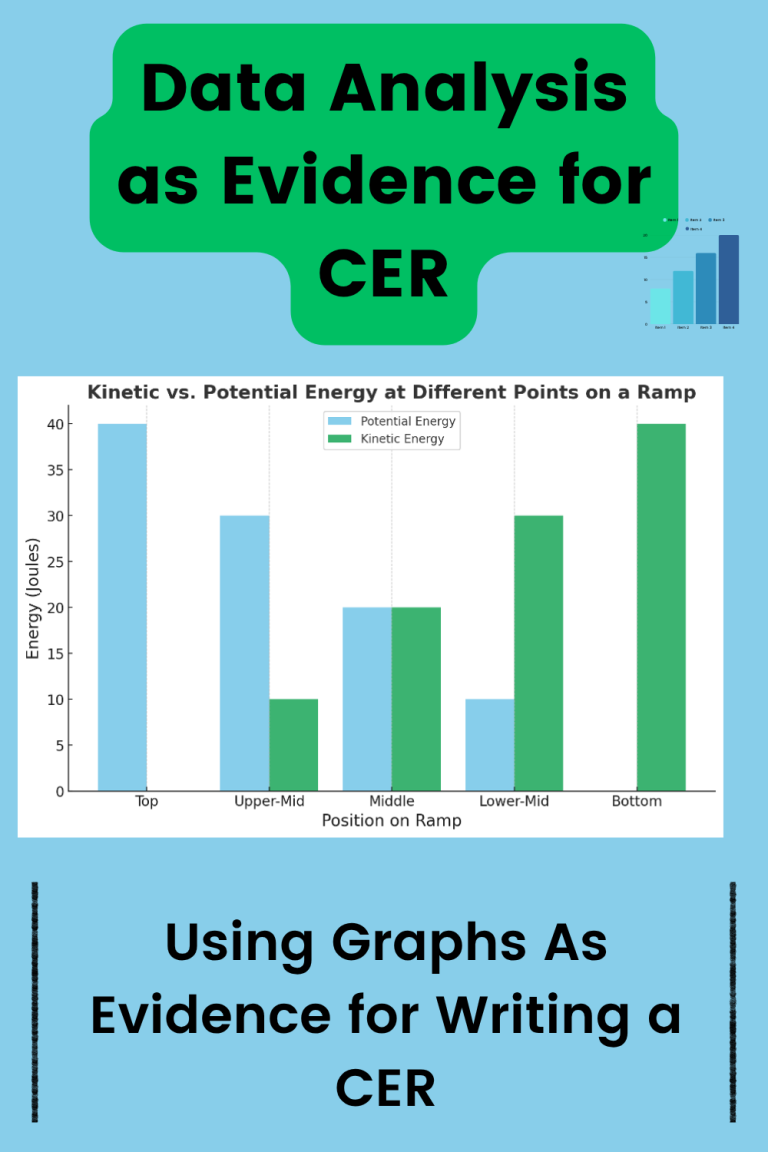
- reading graphs and data tables
- using models to explain systems
- cause-and-effect reasoning
- CER thinking (claim, evidence, reasoning)
- investigation concepts (variables, fair tests, patterns)
Spiral review creates daily touchpoints with these skills so students don’t lose them between units.
It supports real science learning (not just test prep)
Even if you’re not focused on state testing, spiral review helps students:
- connect concepts across units (like energy, matter, and systems)
- use scientific language more naturally
- become faster and more confident with data and models
- reduce “resetting” every time you revisit an idea later

Spiral Review Options for Science Classrooms
The best spiral review routine is one you’ll actually use consistently. Here are flexible ways science teachers use spiral reviews without adding stress.
1) Daily Warm-Up (5 minutes)
- Students complete 1 prompt as they enter.
- You review quickly (whole class, partners, or self-check).
- Keeps routines calm and predictable.
Best for: retention + classroom management + consistent practice
2) Bell Ringer
- Display a prompt and students respond in notebooks.
- Great if you want less copying/printing.
- Works beautifully with graphing questions.
Best for: low-prep routines and discussion
3) Weekly Spiral Quiz (Fridays)
- Use a small set of spiral questions as a quiz.
- Keeps accountability high but still low-stakes.
- Perfect for standards you want to revisit all year.
Best for: tracking progress + motivating effort
4) Small-Group Stations
- Put spiral questions into 3–4 quick stations.
- Include graphs, models, vocabulary, and investigations.
- Can be done in 15–20 minutes once a week.
Best for: engagement + collaboration
5) Sub Plans or Emergency Plans
Spiral review pages are perfect when you need something meaningful that students can do independently (and that you can grade quickly later).
Best for: real learning on “off” days
6) Intervention and Test-Prep Groups
Spiral review is ideal for small-group reteach because it helps you diagnose what’s sticking—and what isn’t.
Best for: closing gaps without reteaching entire units

What Makes a Strong Science Spiral Review?
If you’re creating or choosing spiral review resources, look for:
- mixed topics (not one topic per page)
- short constructed responses (1–2 sentences)
- graphs/models built into questions
- varied question types (MCQ + short answer + investigation skills)
- answer keys for fast feedback
- alignment to your state standards so you’re not guessing
A Simple Way to Start Tomorrow
If you’re new to spiral review, start with this easy plan:
Week 1:
Use 1 spiral prompt per day as a warm-up (Monday–Friday).
Keep it low-stakes. Focus on routine and consistency.
Week 2:
Add quick feedback (partner check, whole-class share, or self-check).
Week 3:
Start highlighting patterns: “Which topic keeps showing up?” “What skill do we need more practice with?”
That’s it. Small starts lead to big results.
Check Out My Spiral Reviews!
6th Grade Science Spiral Reviews
And I’m absolutely open to creating additional state-specific versions as needed.
For 8th Grade, I have:
Michigan M-STEP 8th Grade Review
MCAS Spiral Review for 8th Grade
ISA 8th Grade Science Spiral Review
Check out my spiral reviews!
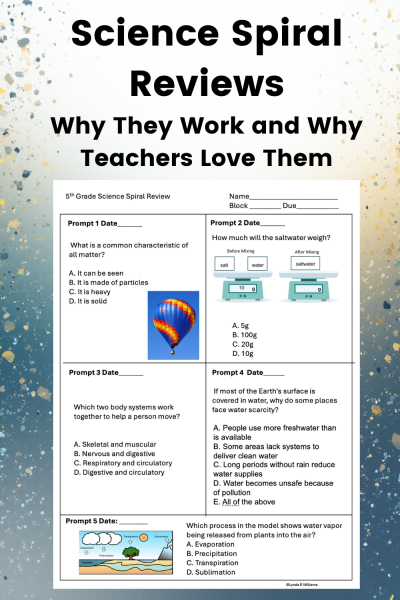
5th Grade Science Sprail Reviews