If you teach science using NGSS or any standards influenced by three-dimensional learning, you’ve likely heard the term Crosscutting Concepts (CCCs). But what exactly are they, and why do they matter?
Crosscutting Concepts are one of the three dimensions of the Next Generation Science Standards (NGSS), alongside Science and Engineering Practices and Disciplinary Core Ideas. Rather than being specific content, they are big ideas that help students make connections across all areas of science.
When students learn to recognize patterns, identify cause-and-effect relationships, analyze systems, or examine structure and function, they begin thinking more like scientists and engineers. These concepts provide an organizational framework that helps students connect learning from life science, Earth science, physical science, and engineering.

The 7 Crosscutting Concepts in Science
| Crosscutting Concept | Description | Example Question Students Might Ask |
|---|---|---|
| Patterns | Observed regularities in events or forms that help scientists classify information and identify relationships. Patterns often lead to questions about why something occurs. | What pattern do we see in the phases of the Moon each month? |
| Cause and Effect | Investigating the mechanisms behind events and determining how one factor influences another. | What causes plants to grow faster in some conditions than others? |
| Scale, Proportion, and Quantity | Understanding that phenomena can behave differently depending on size, time, distance, amount, or energy. | How does the size of an organism affect its energy needs? |
| Systems and System Models | Defining system boundaries and using models to understand how related parts interact within a whole. | How do the parts of an ecosystem work together as a system? |
| Energy and Matter | Tracking how energy and matter move, cycle, and are conserved within and between systems. | Where does the matter in a growing tree come from? |
| Structure and Function | Recognizing that the shape and organization of an object, organism, or system influence what it can do. | How does the structure of a bird’s beak help it survive? |
| Stability and Change | Examining what keeps systems stable and what causes them to change over time. | Why do some ecosystems remain stable while others change rapidly? |
Source: The seven Crosscutting Concepts were established in the A Framework for K-12 Science Education and are a foundational component of the Next Generation Science Standards, helping students connect ideas across scientific disciplines.
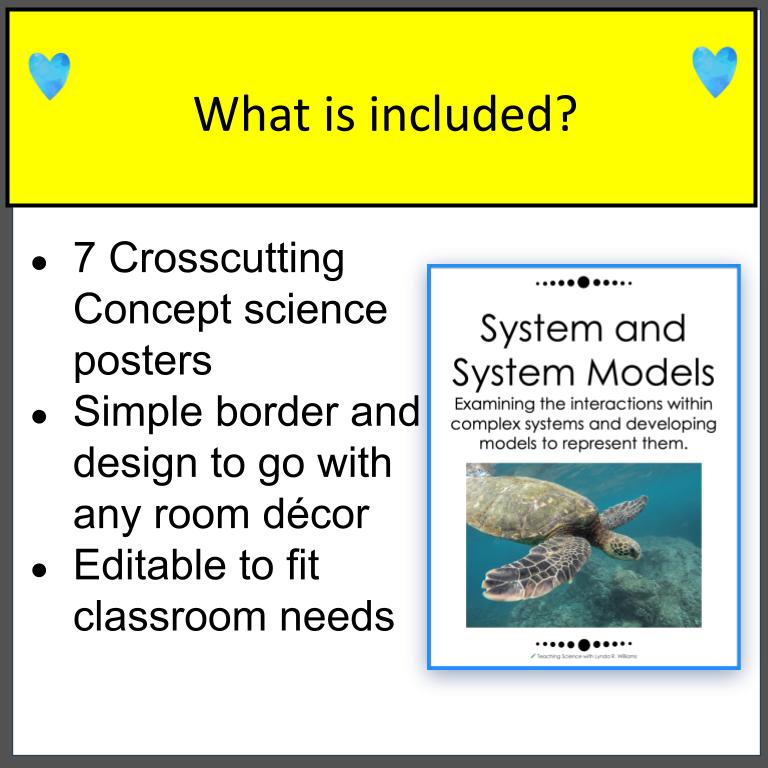
What Are the Seven NGSS Crosscutting Concepts?
The NGSS identifies seven Crosscutting Concepts that appear across grade levels and scientific disciplines.
| Crosscutting Concept | Student Question | Example |
|---|---|---|
| Patterns | What patterns do I notice? | Seasonal weather changes |
| Cause and Effect | Why did this happen? | Increased fertilizer causes algae growth |
| Scale, Proportion, and Quantity | How big, small, fast, or slow is it? | Comparing atoms and planets |
| Systems and System Models | How do parts interact? | Food webs and ecosystems |
| Energy and Matter | Where does it go? | Energy flow through a food chain |
| Structure and Function | How does form affect function? | Bird beaks and feeding habits |
| Stability and Change | What changes over time? | Population changes in ecosystems |
Why Are Crosscutting Concepts Important?
One of the major shifts in NGSS is helping students see science as interconnected rather than a collection of isolated facts. Crosscutting Concepts serve as the bridge between scientific disciplines.
For example:
- A sixth-grade student studying weather patterns is using the same concept of patterns that later helps explain inheritance in biology.
- Cause and effect applies whether students are investigating erosion, chemical reactions, or forces and motion.
- Systems thinking helps students understand ecosystems, the human body, and Earth’s climate.
Research and NGSS guidance suggest that explicitly teaching Crosscutting Concepts helps students develop a more coherent understanding of science and transfer knowledge across different contexts.
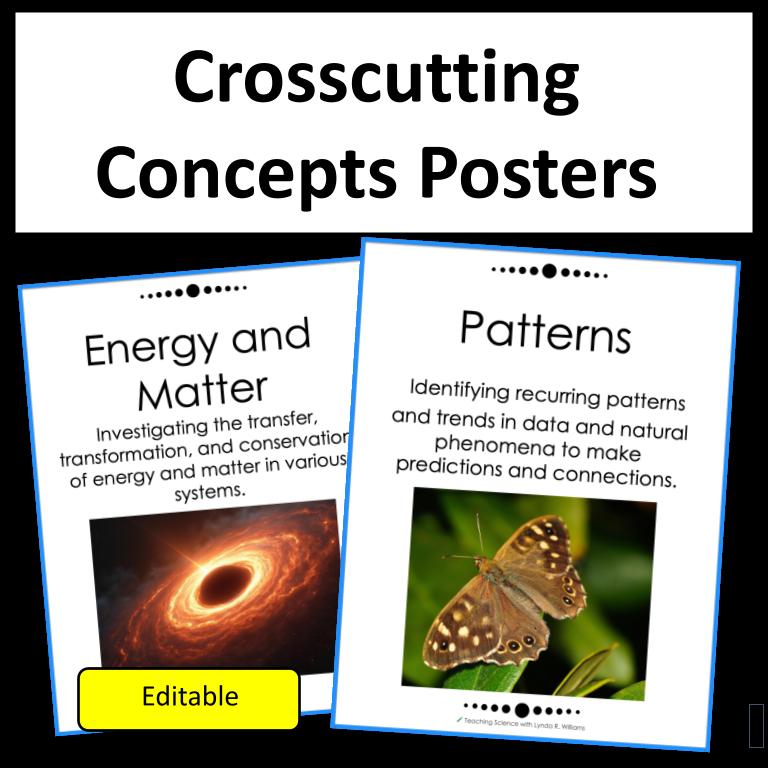
How Should Teachers Teach Crosscutting Concepts?
A common mistake is teaching the Crosscutting Concepts as vocabulary words to memorize. NGSS best practices recommend using them as thinking tools while students investigate phenomena and solve problems.
Best Practice #1: Connect CCCs to Phenomena
Instead of introducing “Cause and Effect” through a definition, present students with a phenomenon.
For example:
Phenomenon: A pond suddenly experiences a fish kill.
Ask students:
- What changed?
- What evidence do you notice?
- What may have caused this event?
Students naturally begin to use the Crosscutting Concept of Cause and Effect as they make sense of the phenomenon.
Best Practice #2: Use Repeated Exposure
Students develop a stronger understanding when they encounter the same Crosscutting Concept across multiple units and disciplines. NGSS documents specifically describe progressions that build from elementary through high school.
For example, students might explore:
- Patterns in moon phases
- Patterns in inheritance
- Patterns in climate data
- Patterns in species populations
Over time, they begin recognizing patterns as a scientific lens for understanding the world.
Best Practice #3: Make Thinking Visible
Use prompts such as:
- What pattern do you notice?
- What is causing this?
- How do the parts of this system interact?
- How does structure relate to function?
These questions help students internalize the Crosscutting Concepts rather than simply memorizing definitions.

Frequently Asked Question: Which Crosscutting Concept Should I Use?
Teachers often wonder which CCC best fits a lesson.
| If Students Are… | Focus On… |
|---|---|
| Looking for trends in data | Patterns |
| Investigating why something happened | Cause and Effect |
| Comparing sizes, rates, or quantities | Scale, Proportion, and Quantity |
| Examining interacting parts | Systems and System Models |
| Tracking movement of energy or materials | Energy and Matter |
| Studying adaptations or designs | Structure and Function |
| Analyzing changes over time | Stability and Change |
This table can serve as a quick planning tool when designing lessons or reviewing NGSS performance expectations.
A Fun Way to Teach Crosscutting Concepts
Many students struggle with Crosscutting Concepts because they sound abstract. One effective strategy is giving students repeated practice through engaging activities that require them to apply the concepts in real-world scenarios.
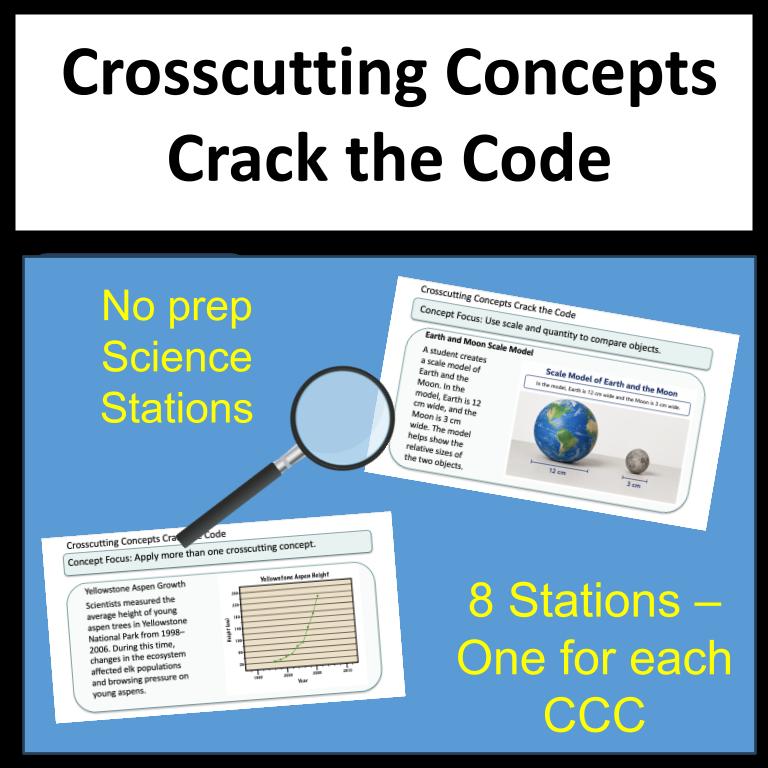
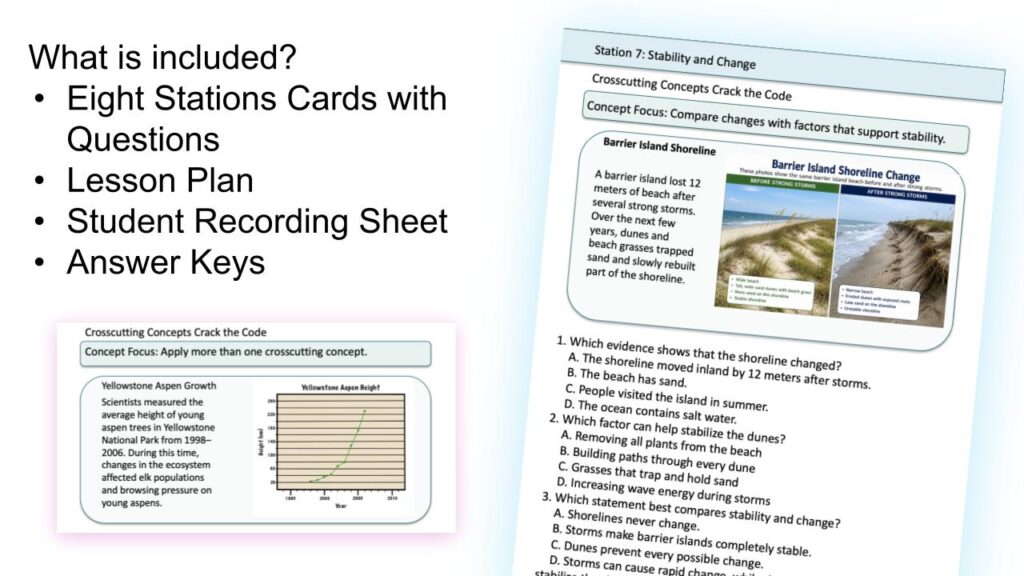
My Crosscutting Concepts Crack the Code Science Rotation Activity was designed specifically for this purpose.
This resource is especially useful for:
Students move through stations, analyze science scenarios, answer questions, and earn clues that help them solve a mystery code. Instead of simply identifying a definition, students must think about how Crosscutting Concepts are used in authentic scientific situations.
- Beginning-of-year science classes
- NGSS introduction lessons
- Science rotations and stations
- Review activities
- Substitute plans
- Early finishers
- Building scientific thinking skills
You can view the resource here:
Crosscutting Concepts Crack the Code Science Rotation Activity
Final Thoughts
Crosscutting Concepts are much more than another set of standards. They help students organize knowledge, recognize connections across scientific disciplines, and develop the habits of mind used by scientists and engineers. When students consistently apply concepts such as patterns, systems, and cause and effect, they begin to make sense of science rather than simply memorizing facts.
Whether you teach NGSS, California’s Preferred Integrated Model, Utah SEEd, or another standards framework influenced by three-dimensional learning, Crosscutting Concepts can transform the way students think about science.

Lynda R. Williams is a veteran science educator, curriculum developer, and creator of hundreds of science resources used by teachers across the United States. She has taught science in multiple states, including California, and specializes in NGSS-aligned instruction, three-dimensional learning, scientific practices, phenomena-based teaching, and middle school science. Through her website, Teaching Science with Lynda R. Williams, she helps teachers make science engaging, rigorous, and accessible through practical classroom strategies, hands-on activities, and standards-aligned resources. Her work focuses on helping students think like scientists by analyzing data, investigating phenomena, constructing explanations, and applying Crosscutting Concepts to real-world situations.
For additional science teaching resources and professional learning articles, visit Teaching Science with Lynda R. Williams.