How to Get Students Up and Moving with Middle School Science Stations
Getting students up and moving does not mean sacrificing meaningful science instruction. Well-designed middle school science stations can help students review important concepts, analyze information, collaborate with classmates, and solve problems while moving purposefully around the classroom.
Crack the Code science stations are one of my favorite ways to combine movement, teamwork, and academic practice. Students rotate through a series of stations, answer questions, collect codes, and solve a final puzzle. The activity feels challenging, but students are still completing focused science practice at every station.
These activities work especially well during the first weeks of school, before a test, at the end of a unit, or anytime students need an engaging break from worksheets and screens.
What Is an Easy Way to Get Students Moving in Science Class?
One of the easiest ways to get students moving in science class is to use short, structured learning stations.
Instead of completing an entire worksheet at one desk, students rotate through stations placed around the classroom. Each station contains a short stimulus, such as a diagram, data table, graph, photograph, scientific scenario, or model.
Students examine the information, answer a few questions, and then move to the next station.
The movement has a clear instructional purpose. Students are not simply walking around the room. They gather evidence, discuss ideas, apply science concepts, and complete a larger challenge.
Why Use Movement During Science Lessons?
Middle school and upper-elementary students often spend much of the school day sitting. Adding structured movement can refresh their attention and help them reengage with the lesson.
Movement-based science activities can also:
- Break a long lesson into manageable sections
- Give students repeated opportunities to refocus
- Encourage productive academic conversations
- Make review activities feel less repetitive
- Provide a screen-free learning option
- Allow students to work with several types of scientific information
- Help teachers observe student understanding while circulating
The key is to keep the movement organized. Students should know where to begin, when to rotate, what to record, and what to do when they finish.
What Are Crack the Code Science Stations?
Crack the Code science stations combine a traditional station rotation with a decoding challenge.
Students visit a series of stations and answer multiple-choice questions at each one. After their answers are checked, students receive a two-digit code. They use a Polybius Square or another decoding system to turn the code into a letter.
After completing all the stations, students arrange the letters to reveal a final secret word.
The decoding element adds curiosity and gives students a reason to keep working carefully. They are not just answering disconnected questions. Every correct station brings them one step closer to solving the final puzzle.
How Do Crack the Code Activities Work?
| Step | What Students Do | Why It Helps |
|---|---|---|
| 1. Begin at an assigned station | Students start in small groups at different locations | Prevents crowding and creates an organized rotation |
| 2. Study the stimulus | Students examine a graph, diagram, model, photograph, or scenario | Builds observation and analysis skills |
| 3. Answer three questions | Students apply the science concept to the information provided | Keeps practice focused and manageable |
| 4. Check the answers | The teacher or a student checker verifies the responses | Provides immediate feedback |
| 5. Collect the code | Students record the two-digit code for the station | Adds motivation and accountability |
| 6. Decode the letter | Students use the decoding chart | Turns review into a puzzle |
| 7. Rotate | Students move to the next station | Adds purposeful classroom movement |
| 8. Solve the final word | Students combine all decoded letters | Creates a satisfying conclusion |
Why Are Science Stations Effective for Review?
Science stations allow students to practice one skill or concept at a time.
A full review packet can feel overwhelming, especially when students see an entire page of questions at once. At a station, students only need to focus on one short scenario and a few related questions.
This makes it easier to include a variety of scientific thinking tasks, such as:
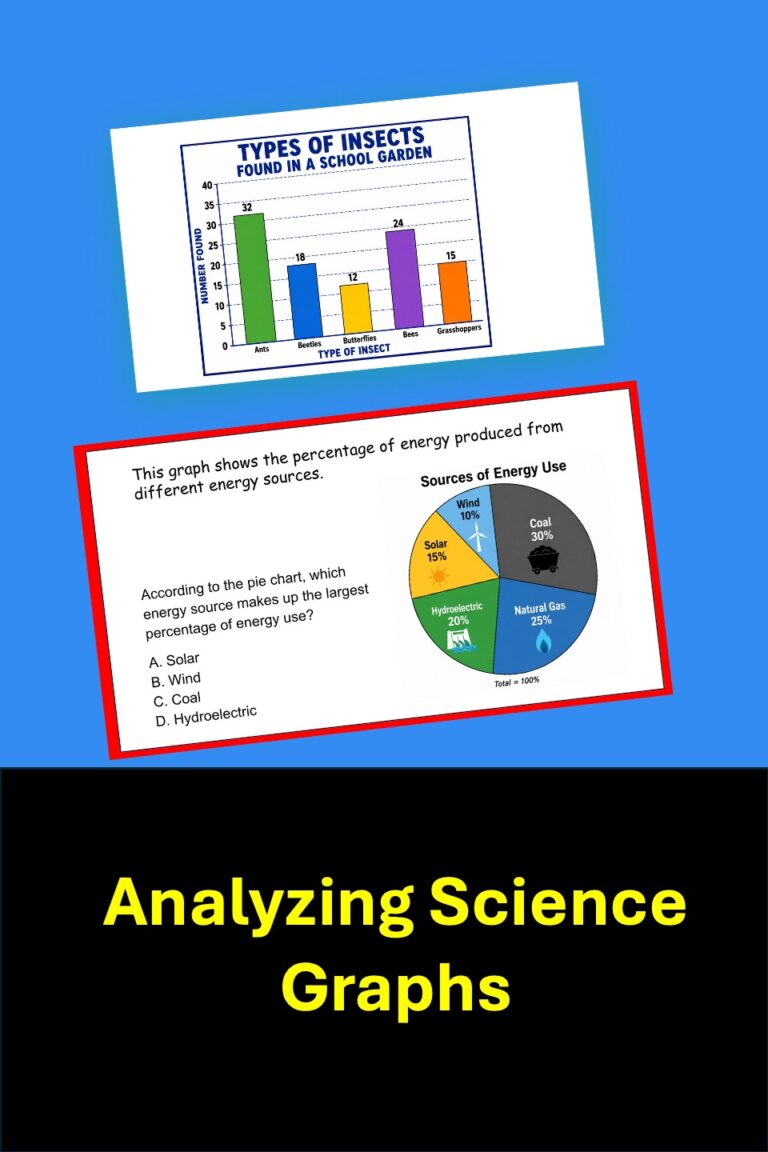
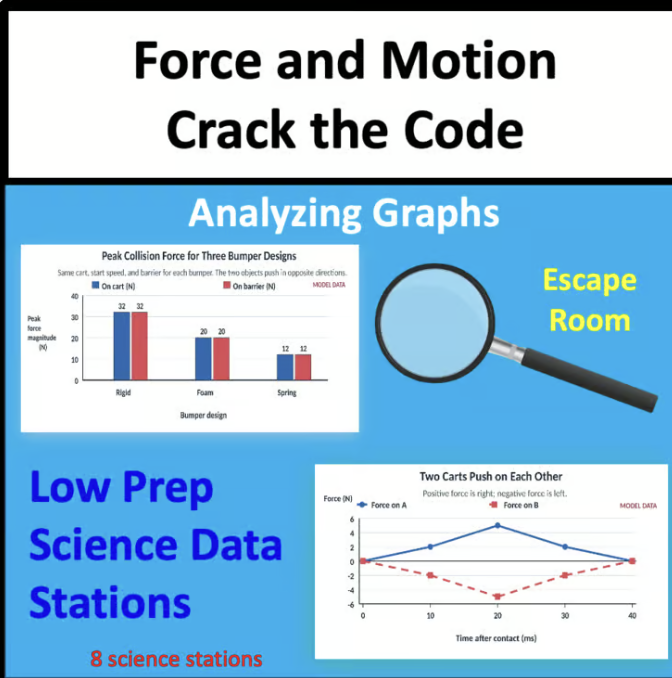
- Interpreting graphs
- Analyzing data tables
- Identifying variables
- Examining experimental setups
- Reading scientific models
- Applying lab safety procedures
- Recognizing patterns
- Connecting evidence with explanations
Because each station is short, students get repeated opportunities to experience success and correct misunderstandings.
Using Crack the Code Stations for Back-to-School Science
Crack the Code science stations are especially useful at the beginning of the school year.
During the first weeks of school, teachers need to introduce expectations while also helping students feel comfortable participating. A structured station activity gives students a chance to practice moving around the classroom, working with partners, recording answers, and following rotation procedures.
Back-to-school science stations can focus on topics such as:
- Lab safety
- Scientific method
- Experimental design
- Science and engineering practices
- Crosscutting concepts
- Graph and data analysis
- Classroom procedures
- Science tools and measurement
These topics help teachers establish important science routines before beginning more complex investigations.
Lab Safety Crack the Code Activity
My Lab Safety Crack the Code Activity is designed for students in grades 5–9 and works well during the first week of science class.
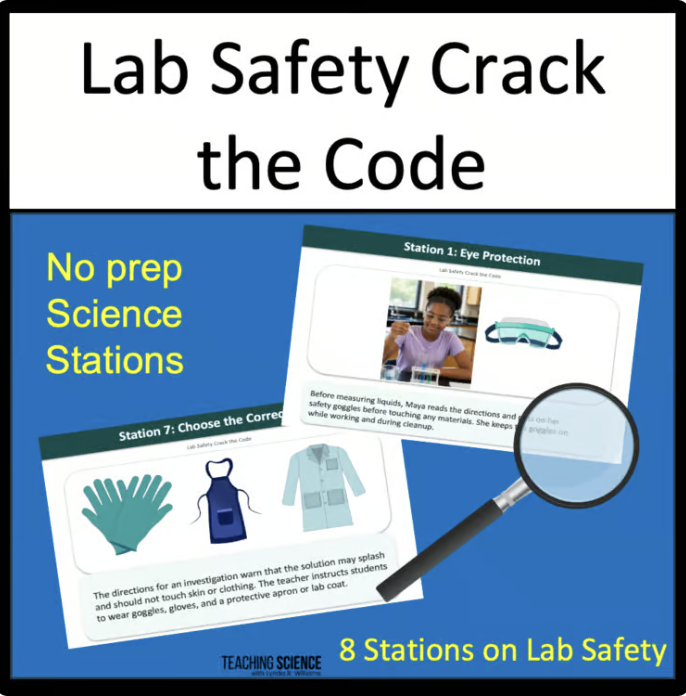
Students rotate through eight lab safety stations and analyze realistic safety scenarios. The activity focuses on the correct choices students should make before, during, and after an investigation.
Topics include:
- Eye protection
- Working safely near heat
- Reading procedures before beginning
- Responding to a chemical splash
- Fire safety
- First aid and reporting
- Choosing the correct personal protective equipment
- Recognizing hazard symbols
Each station contains a visual, a short stimulus, and three multiple-choice questions. Students collect a code after completing each station and use the codes to solve the final challenge.
More Crack the Code Science Station Ideas
Crack the Code activities can be used throughout the school year, not only during back-to-school season.
They work well for introducing, reviewing, or reinforcing topics such as:
- Scientific method and experimental design
- Science and engineering practices
- Crosscutting concepts
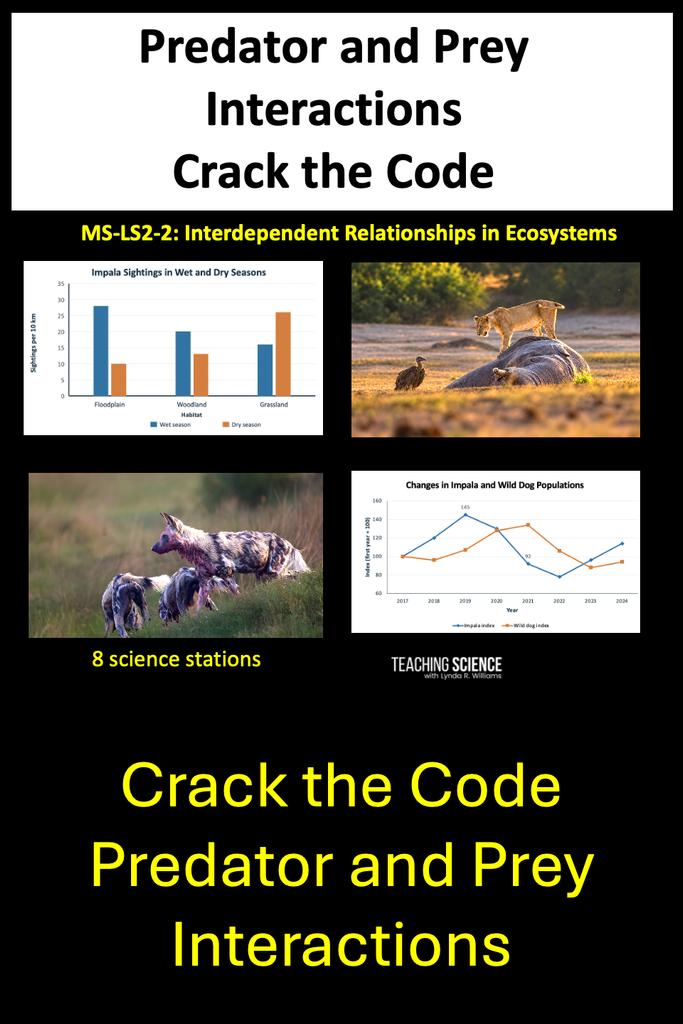
- Ecosystems and energy flow
- Cycling of matter
- Graph analysis
- Earth science
- Life science
- Physical science
- State science test review
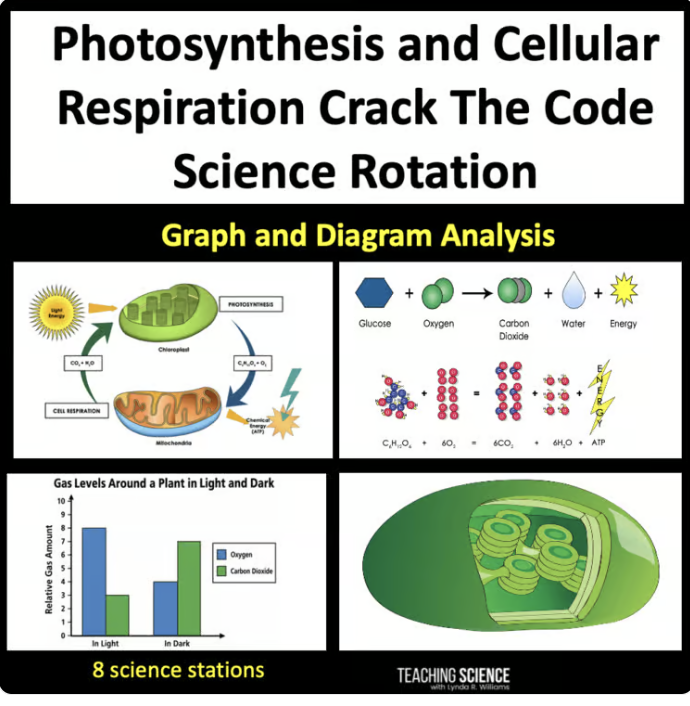
The station format can remain consistent while the scientific content changes. Once students understand how the activity works, future rotations require very little explanation.
How to Manage Science Station Rotations
Successful stations depend on clear routines.
Before beginning, explain:
- Where each group will start
- Which direction students will rotate
- How much time students will have
- Where answers should be recorded
- How students will get their answers checked
- What students should do if a station is occupied
- What voice level is expected
- What to do after completing all stations
Assigning each group a starting station prevents everyone from gathering at Station 1.
For many activities, three to five minutes per station is enough time. Displaying a timer can help students manage their work and prepare to rotate.
Should Students Work Independently or in Groups?
Crack the Code science stations can be completed independently, with partners, or in small groups.
Partners often work well because students can discuss the stimulus and explain their thinking without creating a large group around each station.
Small groups may be helpful for classes that need additional support, but each student should still record individual answers. This keeps everyone accountable and prevents one student from completing the entire activity for the group.
How Can Teachers Check Station Answers?
There are several simple options.
Teacher Check
Students bring their answers to the teacher. When all three are correct, the teacher gives them the station code.
This option provides immediate feedback and allows the teacher to notice common misunderstandings.
Student Checker
A responsible student or student assistant checks answers using a key.
This can reduce the number of groups waiting for the teacher.
Covered Code
Place the station code under a sticky note or paper flap. Students reveal it after completing the questions.
This is the easiest setup, although it requires students to check their own work honestly.
How Do Science Stations Support Collaboration?
Science stations naturally create opportunities for students to talk about science.
Students may ask one another:
- What evidence supports that answer?
- What pattern do you notice?
- Which variable changed?
- What should the student do next?
- What information does the graph provide?
- Why is that the safest choice?
These short discussions help students explain their reasoning and hear how classmates interpret the same information.
The goal is not simply to agree on an answer. Students should be able to explain why their choice is supported by the stimulus.
How Can I Keep Science Stations from Becoming Chaotic?
Movement activities need more structure, not less.
Use these simple expectations:
- Assign starting stations.
- Establish one rotation direction.
- Limit the number of students at each station.
- Keep materials attached to or beside the station card.
- Require students to carry only a recording sheet and pencil.
- Use a visible timer.
- Practice the rotation before beginning.
- Stop and reset the class if movement becomes unsafe.
After students complete one or two station activities, the routine usually becomes much smoother.
Are Science Stations a Good Screen-Free Activity?
Yes. Printable science stations provide a meaningful screen-free learning experience.
Students interact with physical station cards, recording sheets, diagrams, and classmates instead of moving through another online assignment.
Screen-free does not mean low-level. Station activities can still require students to analyze evidence, interpret models, compare data, and make decisions.
For teachers looking for an engaging science activity without computers, Crack the Code stations provide structure, movement, collaboration, and academic practice.
Frequently Asked Questions About Science Stations
What grade levels work best for science stations?
Science stations can be adapted for upper elementary, middle school, and high school students. The complexity of the stimulus and questions should match the grade level.
How many stations should I use?
Six to eight stations usually provide enough variety without making the activity too long. My Crack the Code activities typically use eight stations.
How many questions should each station include?
Three focused questions work well. Students have enough practice to demonstrate understanding without staying at one station too long.
How long does a science station activity take?
An eight-station rotation usually takes approximately 30–40 minutes, depending on the questions, class size, and answer-checking method.
Can science stations be used as an assessment?
Science stations are best used for practice, review, and informal assessment. Teachers can circulate, listen to conversations, and identify concepts that need to be retaught.
Do students need to complete the stations in order?
No. Assigning different starting stations reduces crowding. Students can rotate through the stations in any organized sequence.
Build Movement into Meaningful Science Learning
Getting students up and moving can be more than a classroom break. With the right structure, movement becomes part of the learning process.
Crack the Code science stations give students a reason to move, collaborate, analyze information, and apply science concepts. They also provide teachers with an engaging, low-prep alternative to traditional worksheets and screen-based review.
Whether you are introducing lab safety during the first week of school or reviewing a science unit before an assessment, station activities can help students become active participants in their learning.
Read more about Crack the Code Science Rotations
Hi, I’m Lynda R. Williams. I’ve spent more than 34 years teaching science and 20 years helping prepare future teachers at the university level. I love creating practical science resources that help students think, analyze data, ask questions, and explain their reasoning. My goal is to make science engaging for students while giving teachers clear, useful activities that are easy to bring into the classroom.