What Is a Fun Screen-Free Activity That Gets Students Moving and Learning?
Are you looking for an engaging classroom activity that gets students moving, talking, and learning without more screen time?
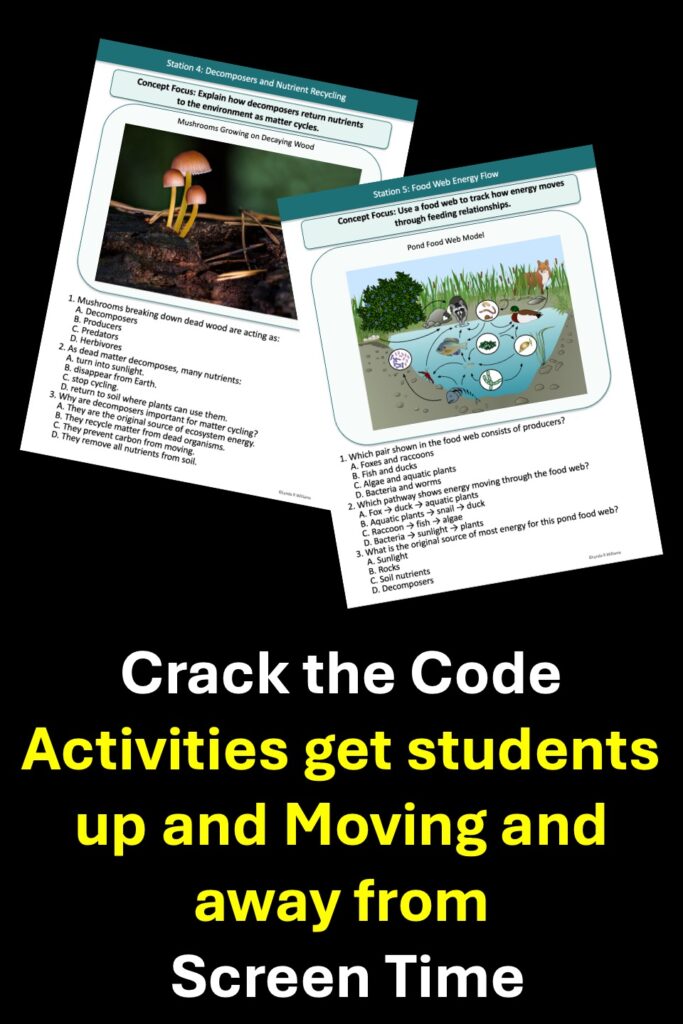
Crack the Code activities are a fun, collaborative way to review science content while students move around the classroom and solve a puzzle. Instead of sitting at a desk completing another worksheet, students rotate through stations, answer questions, collect code clues, and work together to reveal a secret word or message.
What Is a Crack the Code Activity?
A Crack the Code activity combines academic review, classroom movement, teamwork, and puzzle solving.
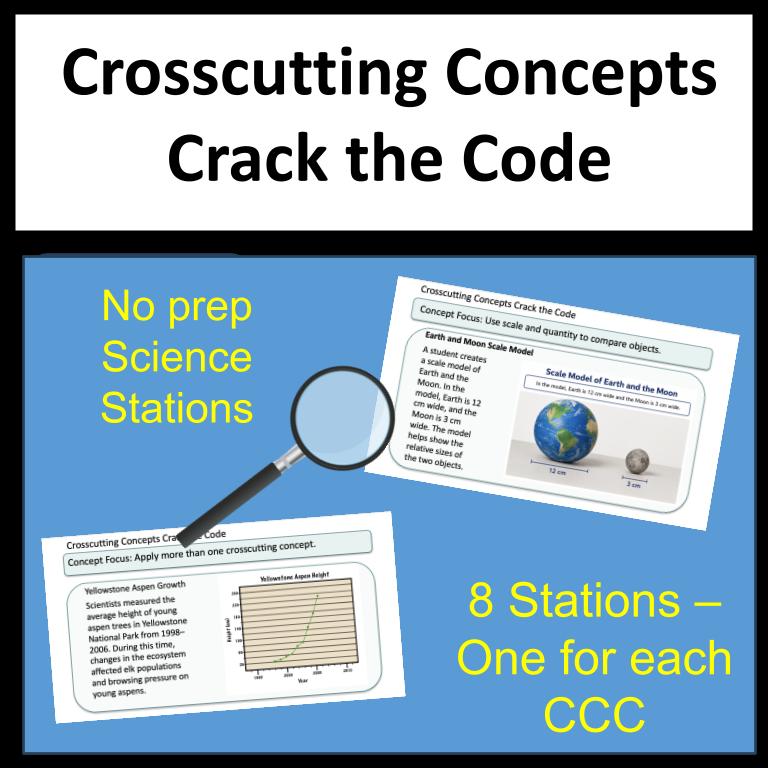
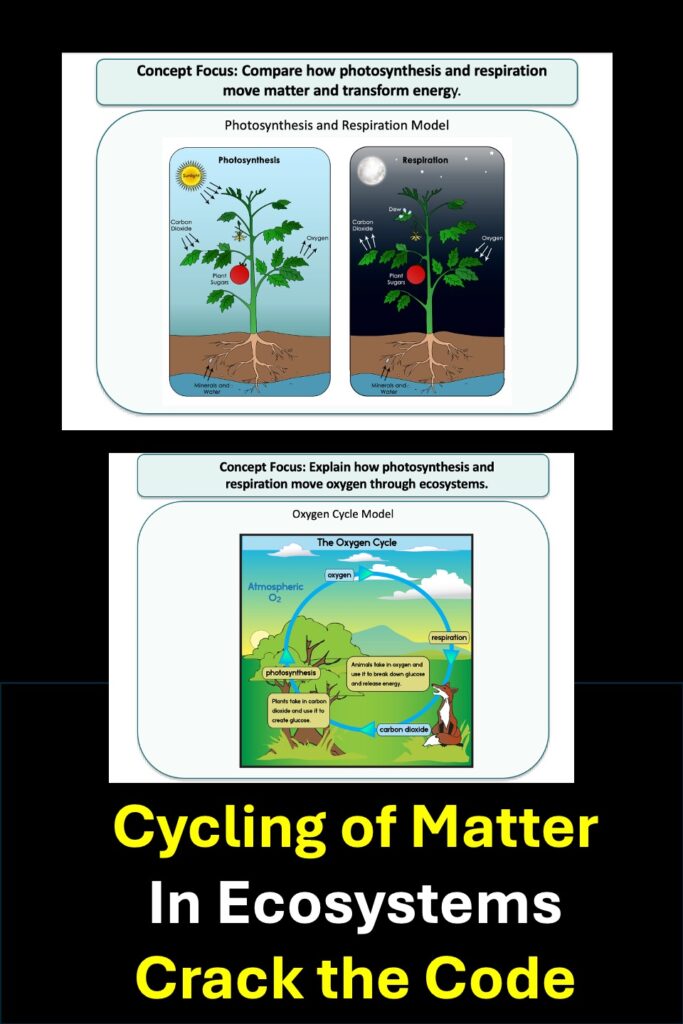
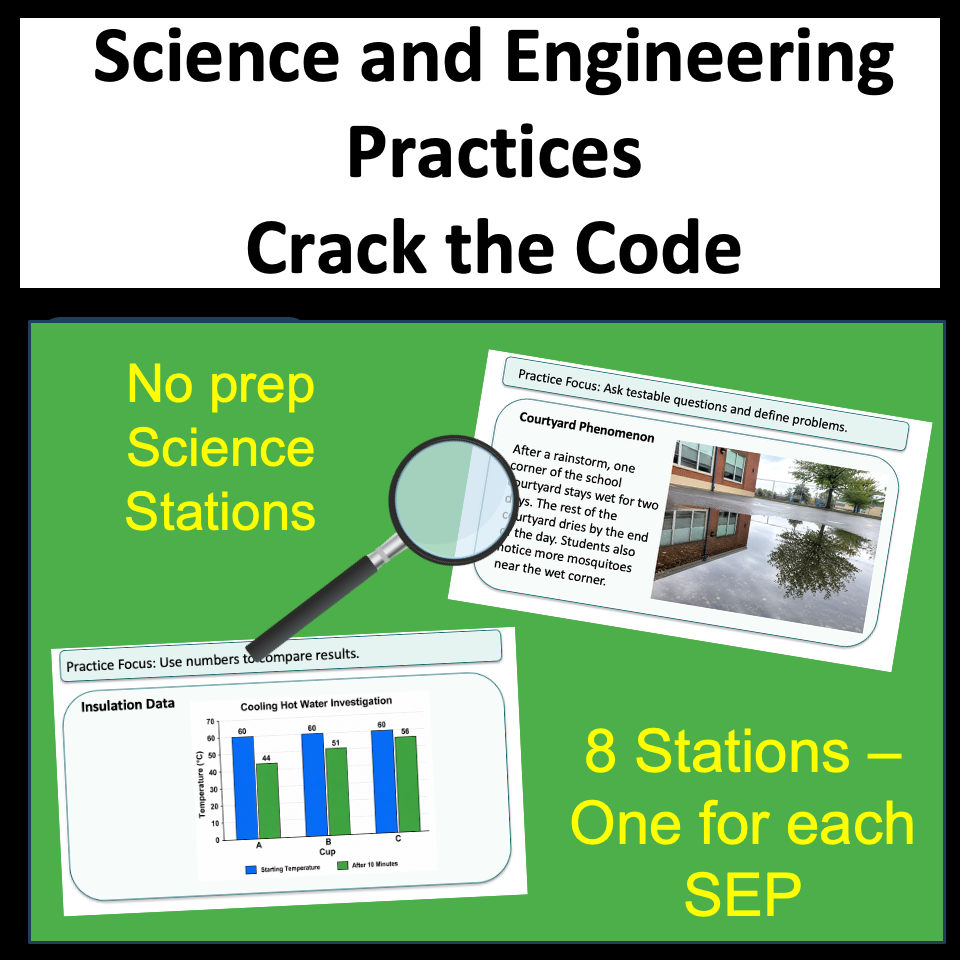
Students typically work with a partner or small group and rotate through several stations. At each station, they read a short passage, analyze a graph, examine a model, or answer content-based questions. Correct answers help students earn a number, symbol, or letter that becomes part of the final code.
Once students complete all the stations, they use their clues to crack the code and solve the final puzzle.
What Is an Engaging Activity That Gets Students Moving Without Screen Time?
A station-based Crack the Code activity is an excellent screen-free option because it gives students a clear reason to move around the room.
Students are not simply walking from one worksheet to another. They are completing a larger mission. Each station brings them one step closer to solving the final mystery.
This structure works especially well for:
- Back-to-school science review
- Unit review
- Test preparation
- Spiral review
- Science and engineering practices
- Graph and data analysis
- Vocabulary practice
- Seasonal classroom activities
Why Is Movement Helpful for Student Engagement?
Sitting for long periods can make it difficult for students to remain focused. Crack the Code stations break a lesson into shorter, manageable tasks and give students opportunities to stand, move, and reset their attention.
Movement also creates natural transitions between questions. Students complete one challenge, move to a new location, and begin again with a fresh task.
Because the movement is connected to learning, students remain active without the activity feeling chaotic or unstructured.
Crack the Code Activities Encourage Collaboration
Crack the Code activities are also effective because students can work collaboratively.
As students move through the stations, they discuss possible answers, explain their reasoning, compare evidence, and correct misunderstandings. These conversations help students process science ideas more deeply than they might when working silently and independently.
Students must also practice important classroom skills, including:
- Listening to a partner
- Taking turns
- Defending an answer with evidence
- Reaching an agreement
- Managing time
- Sharing responsibility
The puzzle gives every group a common goal and encourages students to help one another succeed.
Puzzle Solving Adds Motivation
The final code adds an element of mystery to an ordinary review lesson.
Students want to know whether their answers will lead to the correct secret word or message. This immediate purpose can motivate reluctant learners and make practice feel more like a challenge than an assignment.
The puzzle also encourages accuracy. Students quickly discover that one incorrect response can affect the final solution, so they are more likely to reread questions, check graphs, and reconsider their reasoning.
Crack the Code Activities Make Learning Memorable
Students often remember lessons that include movement, teamwork, and a challenge. A Crack the Code activity brings all three together.
These activities can help teachers transform review questions into an interactive classroom experience—without devices, complicated supplies, or extensive preparation.
For teachers searching for an engaging, screen-free activity that gets students moving and learning, Crack the Code stations offer a practical solution. Students review important content, collaborate with classmates, solve problems, and experience the satisfaction of cracking the final code.
Are you looking for an engaging classroom activity that gets students moving, talking, and learning without more screen time?
Crack the Code activities are a fun, collaborative way to review science content while students move around the classroom and solve a puzzle. Instead of sitting at a desk completing another worksheet, students rotate through stations, answer questions, collect code clues, and work together to reveal a secret word or message.
What Is a Crack the Code Activity?
A Crack the Code activity combines academic review, classroom movement, teamwork, and puzzle solving.
Students typically work with a partner or small group and rotate through several stations. At each station, they read a short passage, analyze a graph, examine a model, or answer content-based questions. Correct answers help students earn a number, symbol, or letter that becomes part of the final code.
Once students complete all the stations, they use their clues to crack the code and solve the final puzzle.
Engaging Screen-Free Activities That Get Students Moving
| Activity | How It Works | Why Students Like It | Best Use |
|---|---|---|---|
| Crack the Code | Students rotate through stations, answer questions, collect clues, and use their answers to solve a final code or secret message. | It combines movement, teamwork, review, and the excitement of solving a puzzle. | Unit review, test preparation, graph analysis, science practices, and back-to-school activities |
| Quiz and Trade | Each student receives a question card, pairs with a classmate, answers each other’s questions, and then trades cards before finding a new partner. | Students interact with many classmates and practice content in short, manageable rounds. | Vocabulary review, quick facts, concept checks, and formative assessment |
| Inner-Outer Circles | Students form two circles facing one another. Partners discuss or answer a prompt, and then one circle rotates to create a new pair. | The movement keeps the pace lively and gives every student repeated opportunities to speak and listen. | Discussion questions, explanation practice, review prompts, and comparing ideas |
| Grudgeball (okay maybe a bit of a screen, but still collaborating and up and moving) | Teams answer academic questions to earn chances to remove points from other teams or change the score according to the game rules. | The unpredictable scoring adds excitement and keeps students engaged even when another team is ahead. | Whole-class review, test preparation, vocabulary practice, and end-of-unit review |
Which Screen-Free Activity Is Best?
The best activity depends on your learning goal. Use Quiz and Trade for fast review, Inner-Outer Circles for discussion, Grudgeball for whole-class competition, and Crack the Code when you want students to move through stations, collaborate, and solve a larger puzzle.
What Is an Engaging Activity That Gets Students Moving Without Screen Time?
A station-based Crack the Code activity is an excellent screen-free option because it gives students a clear reason to move around the room.
Students are not simply walking from one worksheet to another. They are completing a larger mission. Each station brings them one step closer to solving the final mystery.
This structure works especially well for:
- Back-to-school science review
- Unit review
- Test preparation
- Spiral review
- Science and engineering practices
- Graph and data analysis
- Vocabulary practice
- Seasonal classroom activities
Why Is Movement Helpful for Student Engagement?
Sitting for long periods can make it difficult for students to remain focused. Crack the Code stations break a lesson into shorter, manageable tasks and give students opportunities to stand, move, and reset their attention.
Movement also creates natural transitions between questions. Students complete one challenge, move to a new location, and begin again with a fresh task.
Because the movement is connected to learning, students remain active without the activity feeling chaotic or unstructured.
Crack the Code Activities Encourage Collaboration
Crack the Code activities are also effective because students can work collaboratively.
As students move through the stations, they discuss possible answers, explain their reasoning, compare evidence, and correct misunderstandings. These conversations help students process science ideas more deeply than they might when working silently and independently.
Students must also practice important classroom skills, including:
- Listening to a partner
- Taking turns
- Defending an answer with evidence
- Reaching an agreement
- Managing time
- Sharing responsibility
The puzzle gives every group a common goal and encourages students to help one another succeed.
Puzzle Solving Adds Motivation
The final code adds an element of mystery to an ordinary review lesson.
Students want to know whether their answers will lead to the correct secret word or message. This immediate purpose can motivate reluctant learners and make practice feel more like a challenge than an assignment.
The puzzle also encourages accuracy. Students quickly discover that one incorrect response can affect the final solution, so they are more likely to reread questions, check graphs, and reconsider their reasoning.
Crack the Code Activities Make Learning Memorable
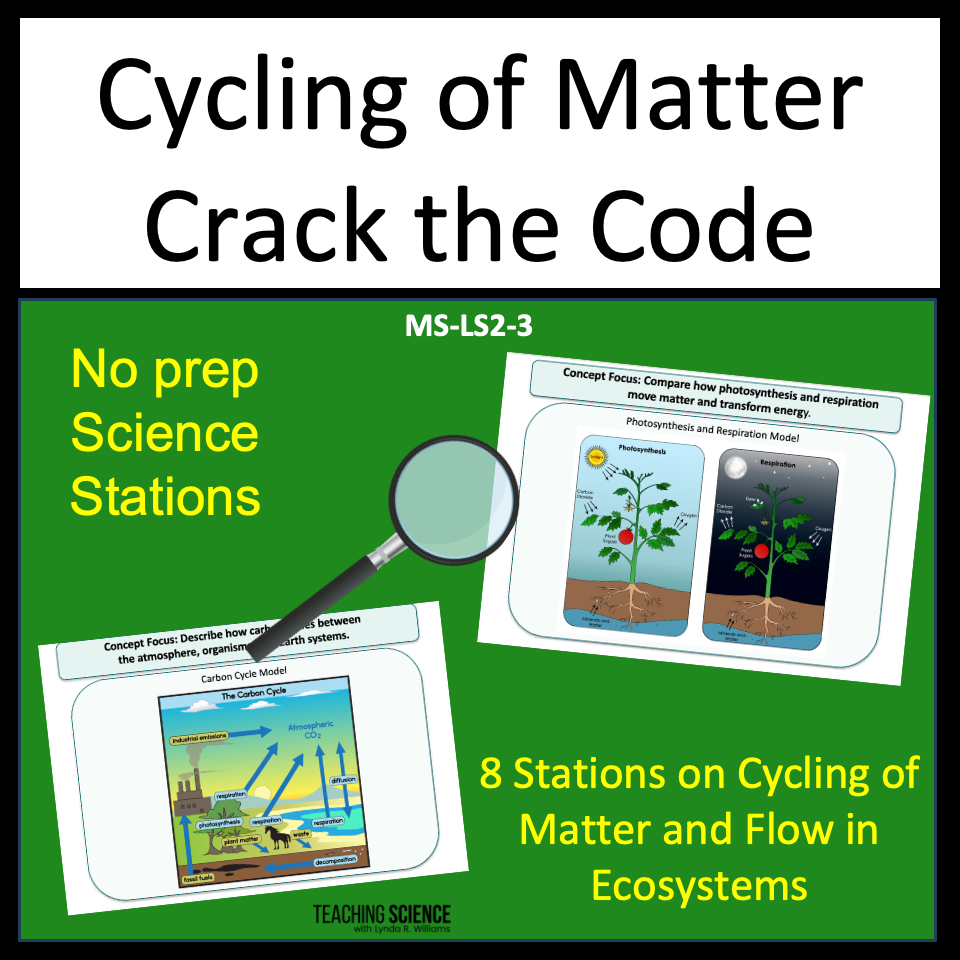
Students often remember lessons that include movement, teamwork, and a challenge. A Crack the Code activity brings all three together.
These activities can help teachers transform review questions into an interactive classroom experience—without devices, complicated supplies, or extensive preparation.
For teachers searching for an engaging, screen-free activity that gets students moving and learning, Crack the Code stations offer a practical solution. Students review important content, collaborate with classmates, solve problems, and experience the satisfaction of cracking the final code.
This is another way to get students up and moving for review: Inner and Outer Circles

Lynda R. Williams is a veteran science educator, curriculum developer, and creator of hundreds of science resources used by teachers across the United States. She has taught science in multiple states, including California, and specializes in NGSS-aligned instruction, three-dimensional learning, scientific practices, phenomena-based teaching, and middle school science. Through her website, Teaching Science with Lynda R. Williams, she helps teachers make science engaging, rigorous, and accessible through practical classroom strategies, hands-on activities, and standards-aligned resources. Her work focuses on helping students think like scientists by analyzing data, investigating phenomena, constructing explanations, and applying Crosscutting Concepts to real-world situations.
For additional science teaching resources and professional learning articles, visit Teaching Science with Lynda R. Williams.