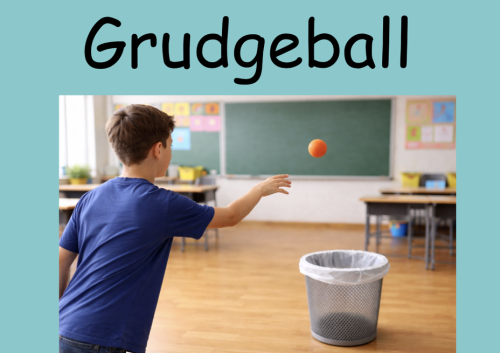
Are you holding a grudge?
Test review doesn’t have to feel like… test review.
If your students tend to check out during review days, I want to show you a simple game that completely changes the energy in your classroom: Grudgeball.
This is not just another digital quiz game. Students are moving, collaborating, thinking, and staying engaged the entire time.
Here’s exactly how to play it—and why it works so well.
What Is Grudgeball?
Grudgeball is a team-based review game where students:
- Work together to answer questions
- Earn points by getting answers correct
- Take a shot (literally!) to score
- Strategically add points to their team or subtract from another
It combines academic review + movement + strategy, which is exactly why students get so invested.
How to Set Up Grudgeball
You don’t need anything fancy.
- A soft foam ball (or even a crumpled piece of paper)
- A trash can or basket
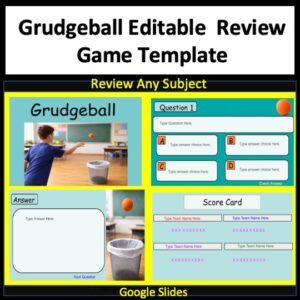
- A slideshow with your questions
- A separate scoreboard (I use another Google Slides tab)
Set up two shooting spots:
- Close shot = 1 point
- Far shot = 2 points
You can tape these spots on the floor or just designate areas in the room.
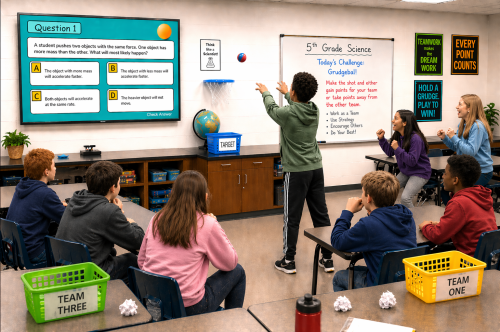
1. Divide Students into Teams
Split your class into small groups. Each team will work together on every question.
2. Rotate Team Turns
Only one team answers at a time.
- The team discusses the question
- One student gives the final answer
- Other teams stay engaged because similar questions may come up
This keeps the game focused and avoids the chaos of everyone answering at once.
3. Correct Answer = Shot Opportunity
If the team answers correctly:
- They choose a shooter
- They choose their shot (close or far)
- They take the shot
4. Scoring Rules
If they make the shot, they can:
- Add points to their own team
OR - Subtract points from another team
Important rules:
- No team can go below 0
- You cannot target the same team twice in a row
This adds just enough strategy without making it complicated.
5. Keep the Game Moving
Continue rotating through teams and questions.
Because teams want their turn (and don’t want other teams gaining points), students stay locked in the entire time.
6. Bonus Round (Optional but Recommended)
At the end, include a bonus round with short-answer or higher-level thinking questions.
You can:
- Double the points
- Allow steals
- Let teams collaborate more deeply
This is a great way to push beyond basic recall.
High Engagement Without Losing Academic Focus
Students are excited—but they still have to get the question right first.
The learning comes first. The game is the reward.
Built-In Collaboration
Every question requires discussion.
Students explain thinking, challenge each other, and work toward the best answer—exactly what we want for deeper understanding.
Immediate Feedback
Students find out right away if they’re correct.
That quick feedback helps reinforce concepts and correct misunderstandings on the spot.
Strategic Thinking
Students aren’t just answering questions—they’re making decisions.
- Do we go for the far shot?
- Do we add points or subtract from another team?
That layer of strategy keeps even reluctant learners engaged.
Movement = Energy + Focus
Let’s be honest—students need to move.
Adding a physical component (even just walking up to take a shot) increases energy and attention, especially during longer review sessions.
Perfect for Test Prep
Grudgeball works really well with:
- Multiple-choice questions
- Graph and data analysis
- Vocabulary review
- Concept checks across units
It turns repetitive review into something students actually look forward to.
Final Thoughts
Grudgeball is one of those activities that students ask for again and again.
It takes content you already have—your questions, your slides—and turns it into something interactive, competitive, and memorable.
If you’ve been looking for a way to make review more effective and more engaging, this is it.