Would you like your students to keep a field journal? In an increasingly digital world, there is a profound, almost radical power in handing a student a blank piece of paper and a pencil and asking them to step outside.
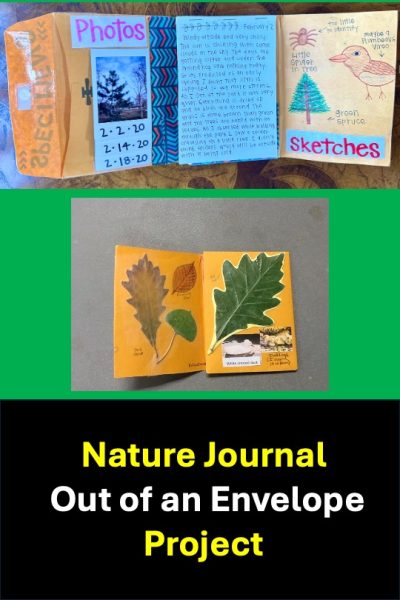
Outdoor education isn’t just a break from the classroom; it is a vital laboratory for developing patience, critical thinking, and a sense of wonder. Recently, I challenged my students to become “field naturalists” using nothing more than a few sheets of paper and a standard mailing envelope.
Here is why this project works, and how you can implement it in your own curriculum.
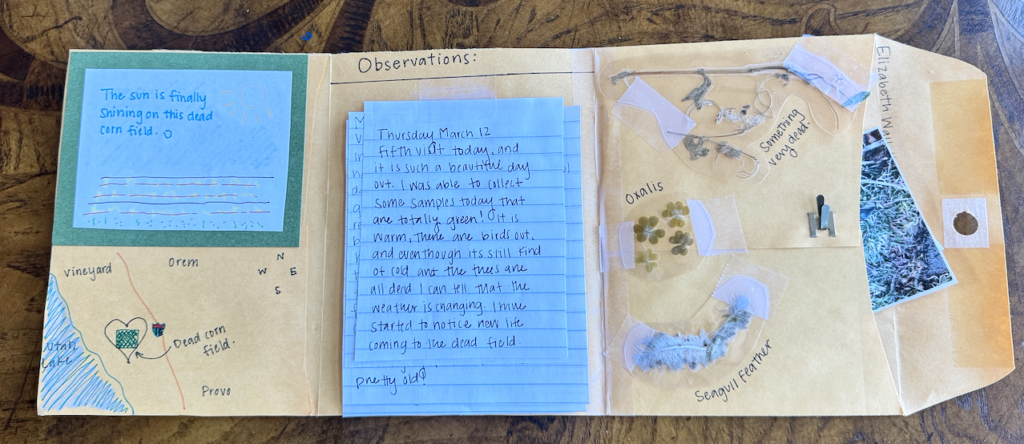
Benefits of Nature Journaling
Why a field journal? Unlike a quick smartphone photo, a field journal requires observational drawing and descriptive writing. When a student has to sketch the serrated edge of a leaf or describe the specific shade of a bird’s wing, they are forced to slow down. They move from being passive “tourists” in nature to active scientific observers.
The Benefits:
-
Scientific Literacy: Students learn to identify species and understand local ecosystems.
-
Mindfulness: Spending 30 minutes in silence at a “field site” reduces stress and improves focus.
-
Tactile Learning: Collecting specimens—the crunch of a dried seed pod or the velvet of a leaf—creates a multi-sensory memory of the lesson.
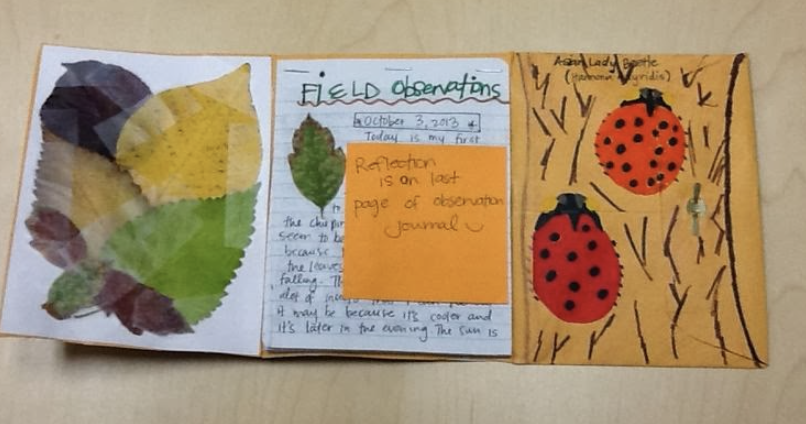
Assigning a Field Journal - Project Based Learning
I gave my students a simple set of parameters to guide their exploration. Here is the framework you can use:
1. The Field Site
Students select a plot of land roughly the size of a football field. This can be a local park, a meadow, or even a specific corner of the school grounds. This “home base” allows them to see how nature changes over time.
2. The Introduction (Establishing Context)
The first page of the journal must include:
-
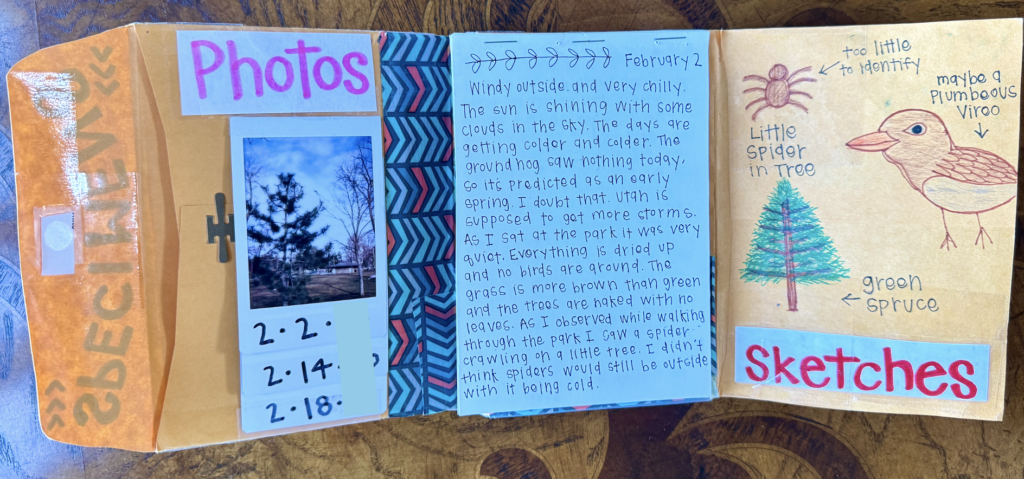
The Basics: Site name, location, and a hand-drawn map.
-
The Visual: A broad sketch or photograph of the entire site to establish the “big picture.”
3. Field Observations (The Heart of the Work)
Students must visit their site at least five times during the semester for at least 30 minutes per visit.
-
The Golden Rule: No typing! Observations must be handwritten in the field to capture the “in-the-moment” experience.
-
The Depth: Each entry must be at least six sentences. I encourage them to look for “nature’s clues”—scat, tracks, seed pods, or the way the light hits the trees.
4. Observational Sketching
Students include at least three detailed drawings of specific elements (leaves, flowers, insects). The goal isn’t “fine art”; it’s accuracy. Using pencils or colored pencils, they must label their sketches with the species name (which they can research after returning to the classroom).
5. Specimen Collection
This is where the envelope design shines. Students collect at least three physical specimens—pressed leaves, feathers, or dried flowers.
-
Pro-Tip: I tell my students that clear packing tape is a field naturalist’s best friend. It seals the specimen down and preserves it beautifully.
-
Ethical Collecting: We always discuss being sensitive to the environment and obeying local laws regarding picking live vegetation.
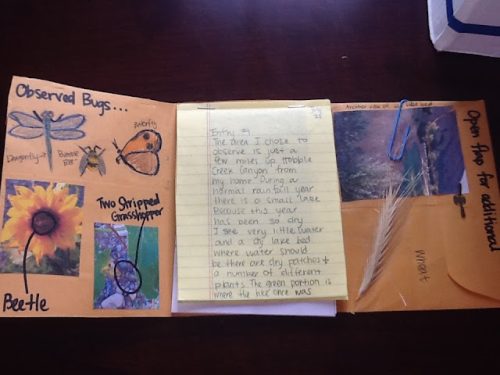
How to Make the "Envelope Nature Journal"
This is a low-cost, high-reward craft that takes about ten minutes to prep.
Materials:
-
One standard letter-sized envelope (the kind with a flap).
-
3–5 sheets of white printer paper.
-
A stapler or a piece of twine.
Directions:
-
Prepare the Pages: Fold your sheets of printer paper in half.
-
The “Pocket”: Fold the envelope in half so the opening/flap is on the outside. This creates a built-in pocket to hold specimens, feathers, or extra notes.
-
Assemble: Tuck the folded paper inside the folded envelope.
-
Bind: Staple along the folded spine, or hole-punch and tie with twine for a more “rustic” look.
-
Secure: The envelope flap can be used to tuck the journal closed or to keep specimens from falling out of the pocket.
By the end of the semester, these thin envelopes transform into thick, weathered records of a student’s personal relationship with the world around them. Happy exploring!
This unit includes
- a slide show presentation
- 7 mini lessons
- Step-by-Step Directions with images
- Editable insert journal pages and prompts
- built-in differentiation
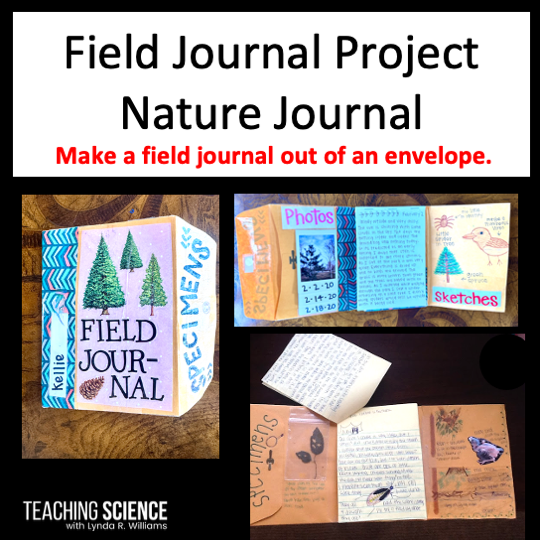
You will also like to read about observational drawings.

About the Author
Lynda R. Williams is an experienced science and STEM educator with more than 34 years in education. She holds a K–12 teaching license and a master’s degree in Curriculum and Instruction. Lynda has taught elementary students and future educators in university Science Methods courses.
She creates practical, standards-based resources that help upper-elementary and middle school teachers make science instruction engaging, meaningful, and manageable. Her areas of expertise include science phenomena, graph and data analysis, STEM engineering, inquiry-based learning, Claim-Evidence-Reasoning, NGSS, and Utah SEEd standards.
Lynda has presented her research on interactive notebooks at professional conferences, received multiple awards for her work, and was honored with a Faculty Excellence Award from Utah Valley University.
Learn more about Lynda R. Williams and her experience in science and STEM education.