If you teach in Utah you need Utah SEEd science resources by someone who understands Utah SEEd. The beginning of the school year is the perfect time to help students see that science is not simply a subject they study. Science is something they already do when they observe, wonder, ask questions, solve problems, and explore the world around them. This is why you want to be sure to have Utah SEEd Science Resources created by someone who understands Utah SEEd.
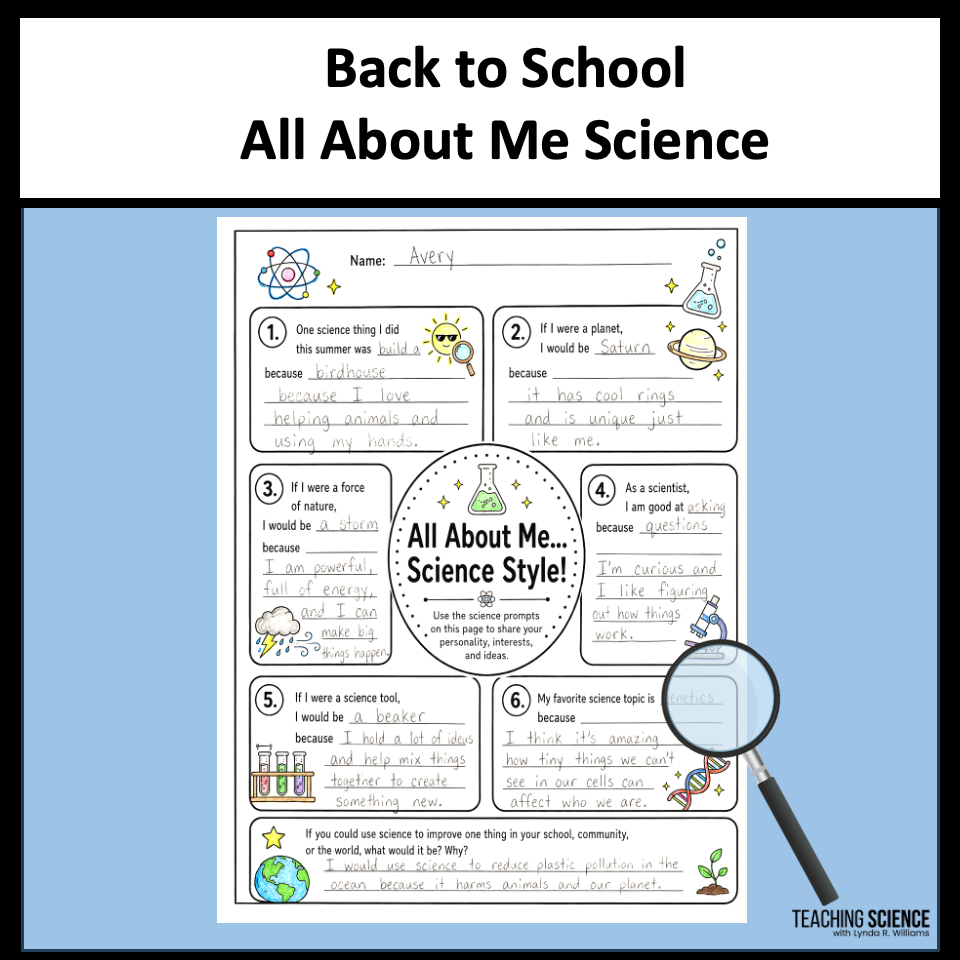
This free All About Me Science Poster gives Utah teachers an easy, no-prep way to build classroom community while introducing students to the mindset behind the Utah Science with Engineering Education (SEEd) Standards.

How Does This Activity Support a Utah SEEd Science Classroom?
The Utah SEEd Standards encourage students to actively participate in science and engineering practices. Scientists ask questions, communicate ideas, collaborate, create models, investigate, and use evidence.
This All About Me Science activity begins building that identity on the first day of class. Instead of asking students only about their favorite food or hobby, the prompts invite them to think about:
- A strength they already have as a scientist
- Their favorite science topic
- A science-related experience from the summer
- A science tool that represents their personality
- A way they could use science to improve the world
These prompts help students understand that curiosity, creativity, observation, and problem-solving are valuable scientific strengths.
What Is Included in the All About Me Science Poster?
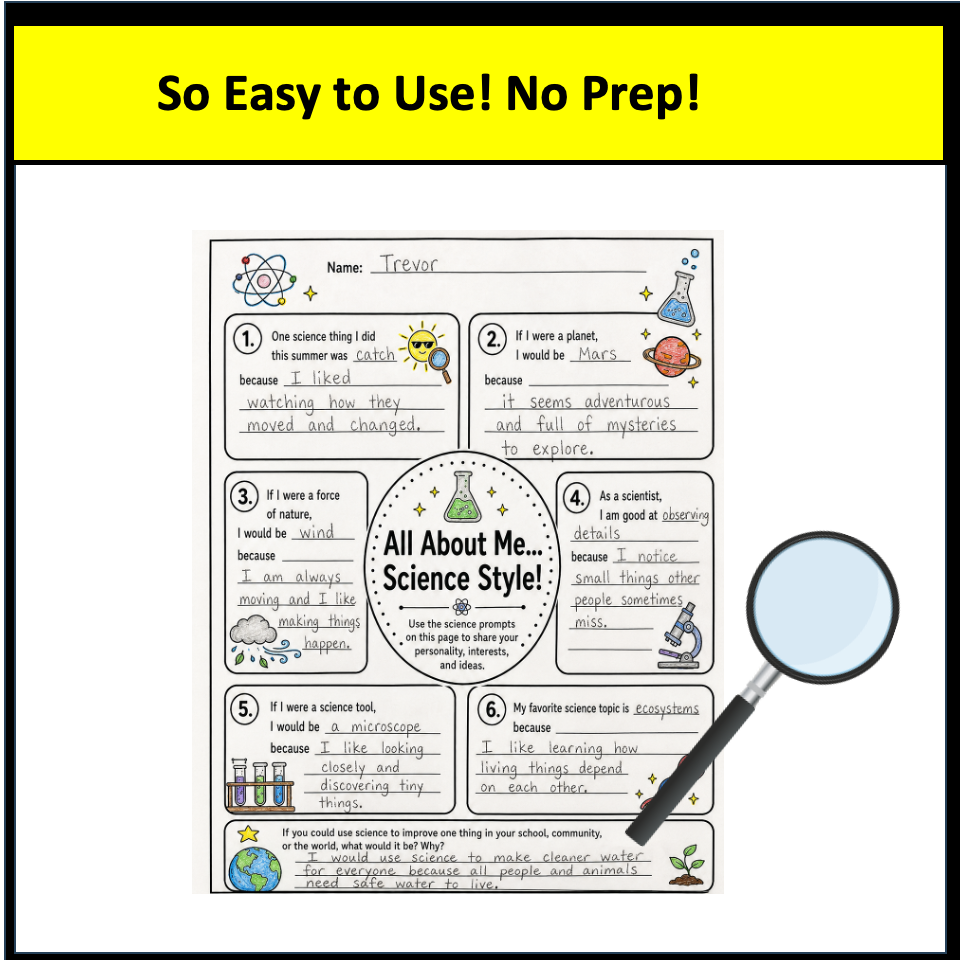
The resource includes a one-page printable student activity and a completed student example. Students answer the science-themed prompts and color the illustrations to create a finished poster.
Everything is ready to print and use, making it a simple first-day science activity for busy Utah teachers.
How Can Utah Teachers Use the Finished Posters?
Students can share their responses with a partner, small group, or the entire class. Their completed pages can then become an easy back-to-school science bulletin board or classroom display.
The posters are also helpful for:
- First-day morning work
- Science bell ringers
- Early finishers
- Classroom community building
- Meet-the-teacher night displays
- Introducing science and engineering practices
As you read the finished posters, you will also learn more about your students’ interests, confidence levels, experiences, and attitudes toward science.
Help Every Student See Themselves as a Scientist
A strong Utah SEEd classroom begins with students believing that their questions and ideas matter. This simple activity sends that message from the first week of school.
Download the free All About Me Science Poster from Teaching Science With Lynda R. Williams on Teachers Pay Teachers and begin the year with a classroom full of curious, capable scientists.
Utah SEEd Science Resources
What Are the Three Dimensions of the Utah SEEd Standards?
The Utah Science with Engineering Education, or SEEd, Standards are designed around three-dimensional science learning. Students do more than memorize science facts. They use scientific practices, reasoning tools, and content knowledge together to investigate phenomena and solve real-world problems.
| Dimension | What It Means | What Students May Do | Example Using a Phenomenon |
|---|---|---|---|
| Science and Engineering Practices (SEPs) | The actions students use to investigate questions, explain events, and solve problems | Ask questions, develop models, conduct investigations, analyze data, construct explanations, design solutions, and communicate information | Students analyze temperature data from different surfaces to investigate why one area of a schoolyard is hotter than another |
| Crosscutting Concepts (CCCs) | Thinking tools that help students recognize relationships and connect ideas across different areas of science | Identify patterns, examine cause and effect, study systems, track energy and matter, and consider stability and change | Students use cause-and-effect reasoning to explain how surface materials affect temperature |
| Disciplinary Core Ideas (DCIs) | The essential science content students need to explain phenomena and solve problems | Apply ideas from physical science, life science, Earth and space science, or engineering design | Students apply their understanding of energy transfer to explain why pavement becomes hotter than grass |
| Three-Dimensional Learning | The intentional integration of practices, crosscutting concepts, and science content within the same learning experience | Use evidence and scientific reasoning to develop a complete explanation or solution | Students combine temperature data, cause-and-effect reasoning, and knowledge of energy transfer to explain differences in surface temperature |
How Do Phenomena Support the Utah SEEd Standards?
Phenomena give students a meaningful reason to use all three dimensions together.
A teacher might begin with an observable event, such as one playground surface becoming much hotter than another. Students ask questions, collect or analyze data, identify cause-and-effect relationships, and apply their knowledge of energy transfer to construct an explanation.
In this example:
- The Science and Engineering Practice is analyzing and interpreting data.
- The Crosscutting Concept is cause and effect.
- The Disciplinary Core Idea involves energy transfer.
- The phenomenon gives students a real event to investigate and explain.
When these elements are intentionally combined, students are not simply learning isolated facts. They are using science knowledge and evidence to make sense of the world around them.
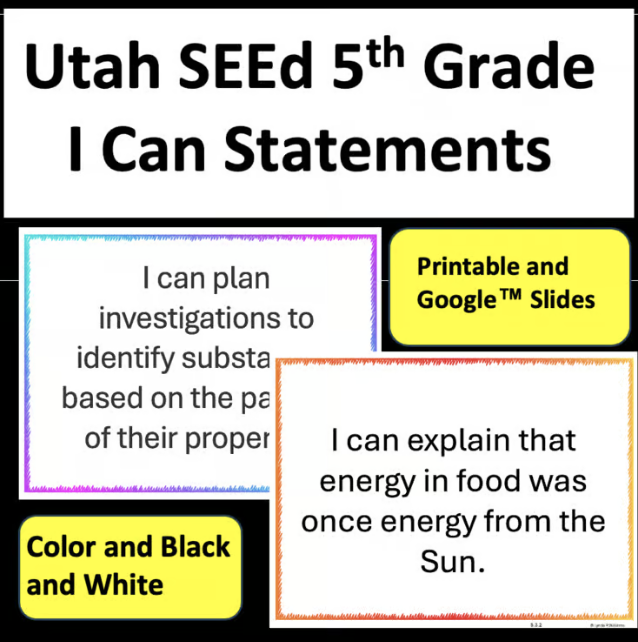
As a Utah science education expert, I specialize in creating classroom resources aligned with the Utah Science with Engineering Education (SEEd) Standards. I offer a growing collection of Utah SEEd science resources for elementary, middle school, and secondary teachers. These materials are designed to help students analyze data, interpret graphs, use evidence, investigate phenomena, and apply science and engineering practices while making standards-based instruction easier for busy Utah teachers.
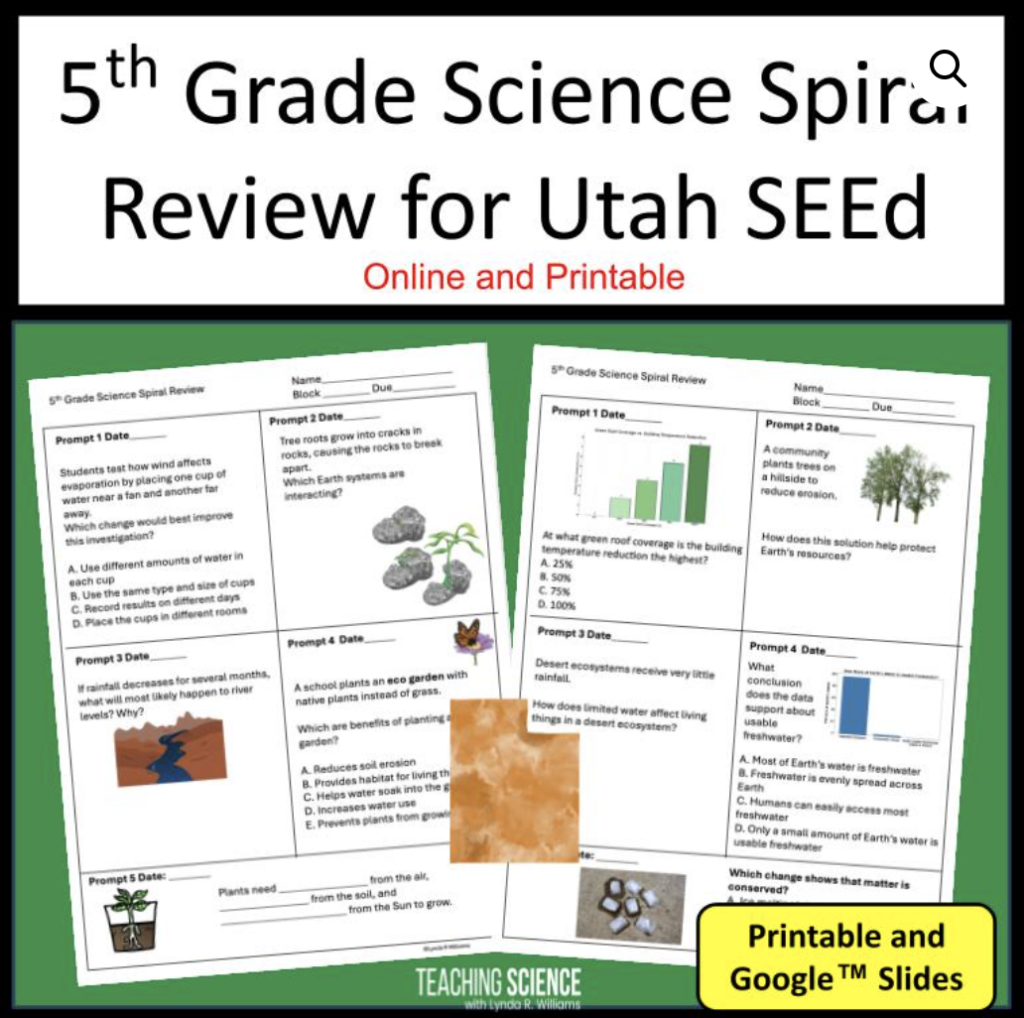
I sell my resources both here on Teaching Science and also on TPT.
About the Author
Lynda R. Williams is an experienced science and STEM educator with more than 34 years in education. She holds a K–12 teaching license and a master’s degree in Curriculum and Instruction. Lynda has taught elementary students and future teachers in university Science Methods courses.
She creates practical, standards-based science resources that help upper-elementary and middle school teachers make science instruction engaging and manageable. Her areas of expertise include science phenomena, graph and data analysis, STEM engineering, inquiry, Claim-Evidence-Reasoning, NGSS, and Utah SEEd science standards.
Lynda has presented her research on interactive notebooks at professional conferences, received awards for her work, and was honored with a Faculty Excellence Award from Utah Valley University.
Learn more about Lynda R. Williams and her experience in science education.