Oklahoma science teachers are preparing to align their instruction with the new Oklahoma Science Standards 2026, also called the 2026 OAS-S. These standards describe what students should understand and be able to do in science and engineering from prekindergarten through high school. Formally known as the Oklahoma Academic Standards for Science.
The updated standards are not simply a list of facts and vocabulary terms to cover. They are performance expectations that ask students to use scientific knowledge as they investigate phenomena, analyze data, develop and revise models, construct explanations, communicate information, and solve problems.
This guide explains the structure of the new Oklahoma science standards 2026, the role of three-dimensional learning and scientific literacy, and practical steps teachers can take as they plan standards-aligned instruction.
What Are the New Oklahoma Science Standards 2026?
The Oklahoma Academic Standards for Science are three-dimensional performance expectations. With the exception of prekindergarten, each standard combines a Science and Engineering Practice, a Disciplinary Core Idea, and a Crosscutting Concept. The standards also include clarification statements, assessment boundaries, and Connections to Scientific Literacy. The Oklahoma Science Standards for 2026 focus on 3 imensional science.
Students must do more than remember scientific information. They are expected to apply science concepts, analyze evidence, explain phenomena, develop models, communicate reasoning, and solve problems.
Watch: Understanding the New Oklahoma Science Standards 2026
This video provides an overview of the 2026 Oklahoma science standards and explains what the updated expectations mean for teachers.
How Are the Oklahoma Science Standards 2026 Organized?
Each standard begins with a performance expectation. The performance expectation summarizes what students should understand and be able to demonstrate after they have mastered the standard. Supporting components help teachers interpret the intended focus, depth, and limits of instruction. This table shows the organization of the Oklahoma Science Standards 2026.
| Standards Component | What It Means | What It May Look Like in Class |
| Performance Expectation | Describes what students should understand and be able to do. | Develop a model, analyze data, construct an explanation, conduct an investigation, or design a solution. |
| Science and Engineering Practice | Identifies actions and thinking used by scientists and engineers. | Ask questions, plan investigations, use mathematics, analyze evidence, or communicate information. |
| Disciplinary Core Idea | Identifies the important science or engineering knowledge students develop. | Build understanding in physical science, life science, Earth and space science, or engineering. |
| Crosscutting Concept | Provides a way to connect ideas across science disciplines. | Examine patterns, cause and effect, systems, energy and matter, structure and function, scale, or change. |
| Clarification Statement | Provides examples or context explaining the intent of the standard. | Use grade-appropriate examples while maintaining the focus of the performance expectation. |
| Assessment Boundary | Identifies concepts or complexity outside the expected assessment scope. | Teach the required concept without assessing beyond the identified boundary. |
| Connection to Scientific Literacy | Connects science learning with evidence, reasoning, communication, and everyday application. | Evaluate information, interpret evidence, revise explanations, and apply scientific ideas to real situations. |
What Is Three-Dimensional Science Learning?
Three-dimensional science learning integrates the content students are learning, the practices they are using, and the broad concepts that help them connect ideas across scientific disciplines.
Science and Engineering Practices
Disciplinary Core Ideas
These dimensions are not meant to be taught as separate checklists. Students use a scientific or engineering practice and a crosscutting concept to develop an understanding of a disciplinary core idea.
A Three-Dimensional Classroom Example
Students might analyze a graph showing changes in an animal population and use the evidence to explain how resource availability affected the ecosystem.
Analyzing and interpreting data is the Science and Engineering Practice.
Ecosystem interactions are part of the Disciplinary Core Idea.
Cause and effect is the Crosscutting Concept.
The lesson is three-dimensional because students use a scientific practice, develop content knowledge, and apply a broad scientific way of thinking at the same time.
What Are the Science and Engineering Practices?
The Science and Engineering Practices describe the actions students use while investigating questions and solving problems.
Asking Questions and Defining Problems
Developing and Using Models
Planning and Carrying Out Investigations
Analyzing and Interpreting Data
Using Mathematics and Computational Thinking
Explaining Scientific Ideas and Creating Solutions
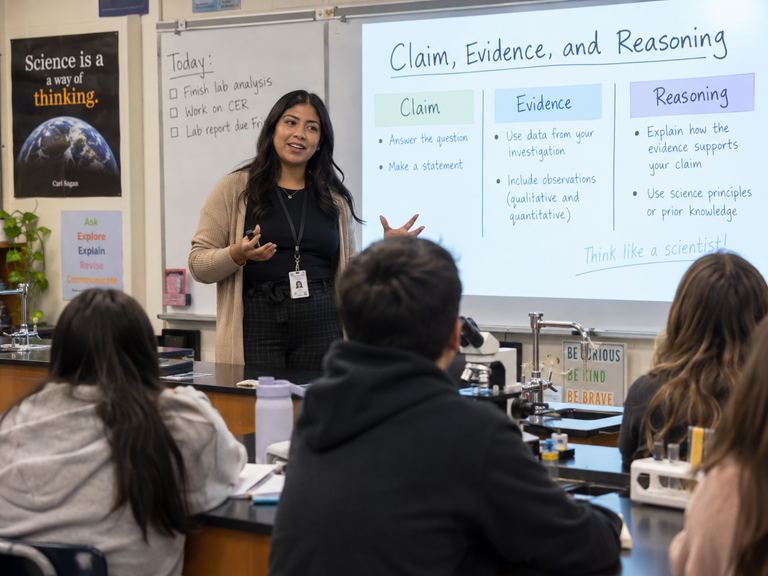
Engaging in Argument from Evidence
Obtaining, Evaluating, and Communicating Information
A lesson does not need to include every practice. The practice should be selected because it helps students make sense of the specific content in the performance expectation.
What Are the Crosscutting Concepts?
Crosscutting Concepts are ways of thinking that students can apply in physical science, life science, Earth and space science, and engineering.
Patterns
Cause and Effect
Scale, Proportion, and Quantity
Systems and System Models
Energy and Matter
Structure and Function
Stability and Change
These concepts help students connect new learning to ideas they have encountered in other units and grade levels. Teachers can make the concepts visible by including them in questions, class discussions, models, and written explanations.
What Are Connections to Scientific Literacy?
The 2026 standards include explicit Connections to Scientific Literacy. These connections support students in understanding and applying scientific concepts, processes, evidence, and reasoning in everyday situations.
Scientific literacy includes more than reading a science passage. It involves interpreting evidence, evaluating information, communicating ideas, recognizing how scientific knowledge is developed, and making informed decisions.
Compare claims with available evidence.
Distinguish observations from inferences.
Interpret graphs, models, tables, and scientific texts.
Explain how evidence supports or challenges a conclusion.
Revise an explanation when new evidence becomes available.
Communicate scientific information clearly.
How Do the Standards Address Engineering and Aeronautics?
The 2026 OAS-S include engineering expectations and separate Aeronautics and Engineering sections. Standards with an engineering emphasis are identified within the standards document.
Engineering learning asks students to apply science ideas to practical problems. Students may define a problem, identify criteria and constraints, compare possible solutions, test a design, analyze results, and improve the solution.
Engineering should not be reduced to building an object at the end of a unit. A strong engineering task includes a clear problem, relevant science content, evidence-based decision-making, and opportunities to revise a solution.
What Do the New Standards Mean for Oklahoma Science Teachers?
The shift is not about adding more activities to an already crowded schedule. It is about choosing lessons that allow students to use science knowledge in meaningful ways.
Begin units with a phenomenon, question, problem, model, or data set that gives students something to figure out.
Connect each activity to the complete performance expectation rather than teaching only the topic named in the standard.
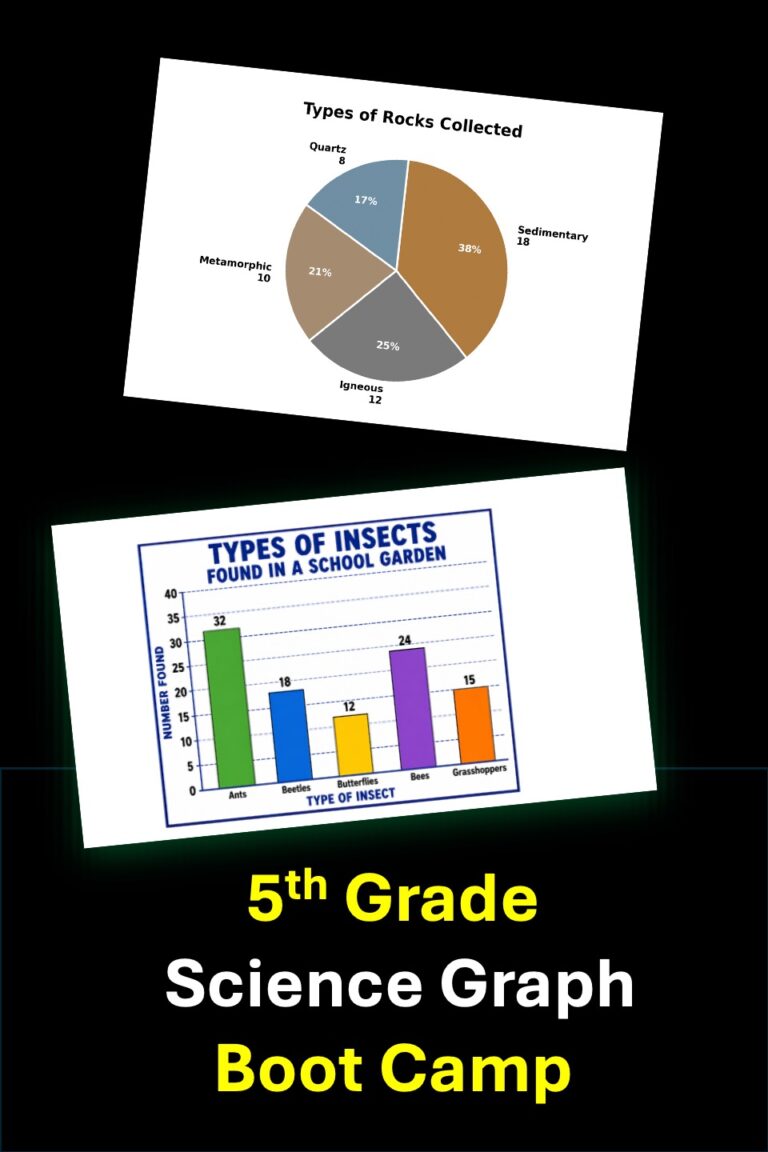
Give students frequent practice analyzing graphs, tables, models, images, and written evidence.
Ask students to explain why an answer is supported, not simply identify the correct answer.
Use models as thinking tools that students develop, test, and revise.
Include engineering tasks with clear criteria, constraints, evidence, and revision.
Check clarification statements and assessment boundaries before deciding how deeply to teach a concept.
How Should Teachers Prepare for the Oklahoma Science Standards 2026?
Read the complete standards for your grade level or course.
Identify the Science and Engineering Practice, Disciplinary Core Idea, and Crosscutting Concept in each performance expectation.
Review clarification statements and assessment boundaries.
Create a yearlong standards map or pacing guide.
Audit current lessons and resources for true three-dimensional alignment.
Add opportunities for data analysis, modeling, scientific explanation, and evidence-based reasoning.
Plan common assessments that measure what students can do with their knowledge.
An existing lesson does not necessarily need to be replaced. In many cases, a lesson can be strengthened by adding a meaningful phenomenon, improving the student questions, including data or a model, and requiring students to explain their thinking with evidence.
How Can Teachers Check Whether a Resource Is Truly Aligned?
A resource is not fully aligned simply because its title contains the name of a standard or because it covers a related topic.
Does the resource address the grade-level Disciplinary Core Idea?
Do students actively use the Science and Engineering Practice named in the standard?
Does the Crosscutting Concept help students organize or explain their thinking?
Is the task consistent with the clarification statement?
Does the lesson remain within the assessment boundary?
Do students analyze evidence, model a system, explain a phenomenon, or solve a problem?
Does the assessment measure application and reasoning rather than vocabulary alone?
True alignment requires attention to the full performance expectation and all three dimensions.
Will Oklahoma Science Assessments Change?
Oklahoma currently administers state science assessments in Grade 5, Grade 8, and Grade 11. Teachers should use the most current assessment blueprints, item specifications, and implementation guidance provided by the Oklahoma State Department of Education.
Because assessment guidance can change during a standards transition, teachers and districts should avoid assuming that every detail of the previous assessment will remain the same. The official OSDE science and assessment pages should be treated as the current source of information.
Frequently Asked Questions About the 2026 Oklahoma Science Standards
Are the Oklahoma science standards 2026 the same as the NGSS?
No. Oklahoma has its own state-adopted science standards. However, the Oklahoma standards use a three-dimensional structure that includes Science and Engineering Practices, Disciplinary Core Ideas, and Crosscutting Concepts. Teachers should plan from the exact Oklahoma performance expectations rather than relying only on a general NGSS resource.
Do teachers need to teach the three dimensions separately?
No. The dimensions are intended to work together. Students should use a practice and a crosscutting concept to develop and demonstrate understanding of the science content.
Does every lesson need a hands-on lab?
No. Three-dimensional learning can occur through investigations, data analysis, modeling, reading, discussion, simulations, engineering tasks, and scientific writing. The important question is whether students are actively using evidence and scientific reasoning.
What is the difference between a topic and a performance expectation?
A topic identifies what the lesson is about. A performance expectation describes what students should be able to do with their understanding of that topic. Teaching the topic alone may not address the required practice, crosscutting concept, or level of reasoning.
Why are assessment boundaries important?
Assessment boundaries identify content or complexity that students are not expected to demonstrate for that performance expectation. They help teachers maintain appropriate grade-level rigor without extending instruction beyond the intended scope.
Where can teachers find the official Oklahoma science standards?
Teachers can download the final 2026 Oklahoma Academic Standards for Science from the Oklahoma State Department of Education science webpage. OSDE also provides standards resources, assessment materials, professional learning, and Oklahoma Frameworks.
Final Thoughts for Oklahoma Science Teachers
The new Oklahoma science standards create an opportunity to make science instruction more coherent, rigorous, and meaningful.
Students still need accurate science content, but they also need to know how to use that content. They need to ask questions, interpret evidence, analyze data, revise models, explain phenomena, and communicate their reasoning.
Teachers do not have to change everything at once. Begin with the complete performance expectations, identify the three dimensions, and strengthen one unit at a time. Small, intentional changes can move instruction away from memorization and toward genuine scientific sensemaking.
When students are actively investigating questions, analyzing evidence, and explaining their thinking, they are not simply learning about science. They are learning how to think and work like scientists and engineers.
Official Resources
2026 Oklahoma Academic Standards for Science
Complete Oklahoma Science Bundles for Grades 6–8
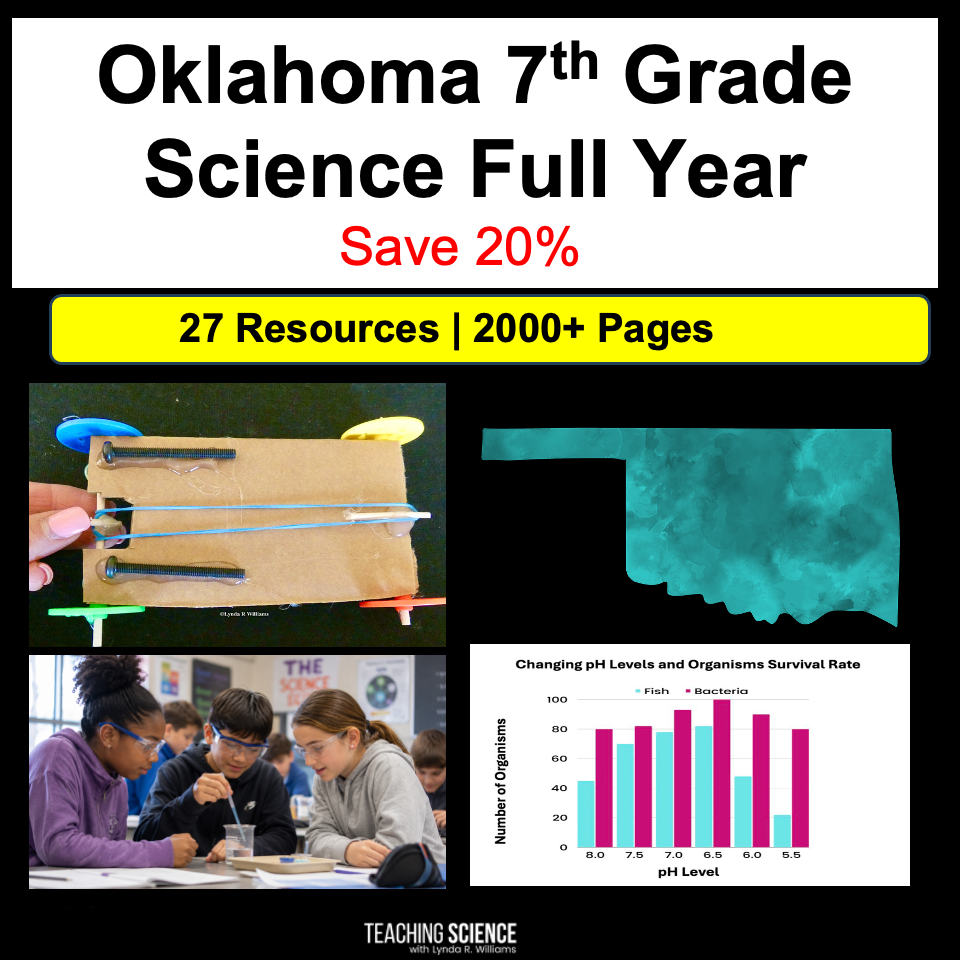
Preparing for the new 2026 Oklahoma Academic Standards for Science does not have to feel overwhelming. I have created complete, full-year science curriculum bundles for 6th, 7th, and 8th grade, each designed to align with the new Oklahoma science standards.
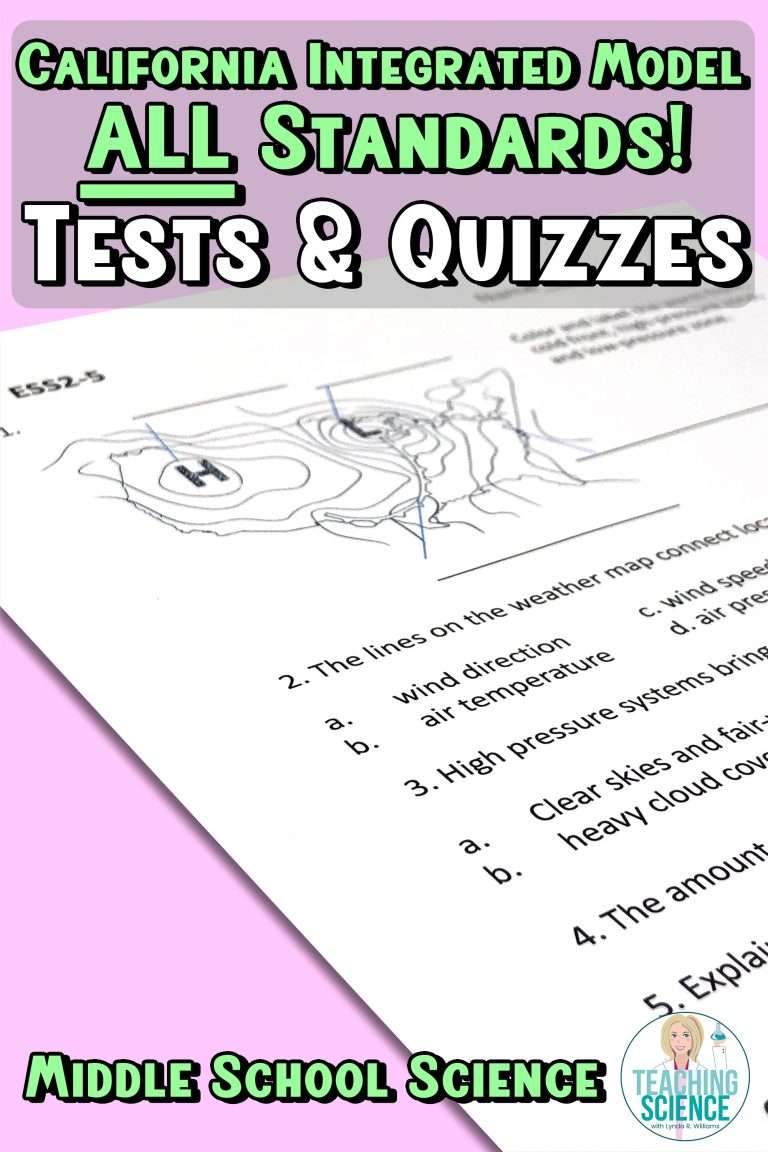
Every bundle includes engaging lessons, readings, labs, graphing activities, projects, assessments, and a pacing guide to help teachers organize the entire year. These resources support three-dimensional science instruction by helping students analyze data, develop models, explain phenomena, use evidence, and apply scientific reasoning.
Teachers can choose the grade level they need and feel confident knowing the curriculum is organized, rigorous, engaging, and built specifically for Oklahoma’s 2026 science standards.
Each Oklahoma science bundle also includes a detailed pacing guide to help teachers plan and organize the entire school year. The pacing guides outline a suggested week-by-week sequence, connect resources to the appropriate 2026 Oklahoma science standards, and make it easier to see when each lesson, lab, reading, graphing activity, project, and assessment can be taught. Teachers can follow the guide as written or adjust it to fit their district calendar, instructional schedule, and student needs.

About Lynda R. Williams
Lynda R. Williams is an experienced science educator and curriculum designer with more than 34 years of experience in education. She has taught upper elementary and middle school science, as well as university-level science methods courses for future teachers. With a master’s degree in Curriculum and Instruction, Lynda specializes in standards-aligned science instruction, three-dimensional learning, graph analysis, CER writing, scientific inquiry, and engaging STEM activities. Through Teaching Science with Lynda R. Williams, she creates rigorous, teacher-friendly resources that help educators save time while providing meaningful science learning experiences for students.