If you are looking for an engaging project-based learning activity that combines environmental science, STEM, engineering design, sustainability, creativity, and critical thinking, a sustainable city challenge is one of the best ways to bring real-world science into your classroom.
My Build a City Environmental Sustainability PBL Activities resource gives students the opportunity to design their own environmentally friendly city while applying important science concepts in meaningful ways.
This activity is especially popular as an end-of-year science project, but it also works beautifully during:
- Environmental science units
- Human impact lessons
- STEM activities
- Engineering design challenges
- Earth Day projects
- NGSS sustainability units
- Gifted enrichment
- Science centers or camps
Why Project-Based Learning Works So Well in Science
Project-based learning encourages students to move beyond memorization and start thinking like real scientists and engineers.
Instead of simply answering questions on a worksheet, students must:
- Solve problems
- Design solutions
- Make decisions
- Defend their thinking
- Collaborate with classmates
- Apply science concepts to real-world situations
Students become more engaged because the learning feels authentic and meaningful.
Sustainable city projects naturally encourage higher-level thinking because students must balance environmental concerns, human needs, transportation, energy use, waste management, and conservation.
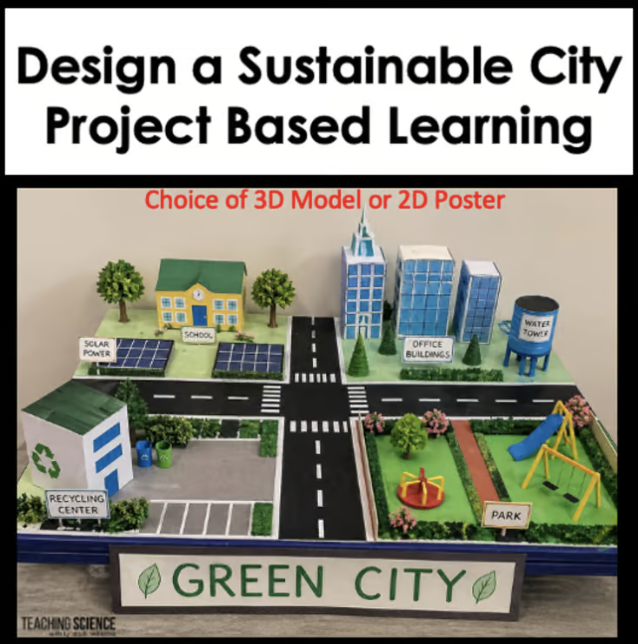
Flexible for Teachers: Choose 2D or 3D
One of the biggest benefits of this sustainable city STEM project is flexibility.
Teachers can decide whether students create:
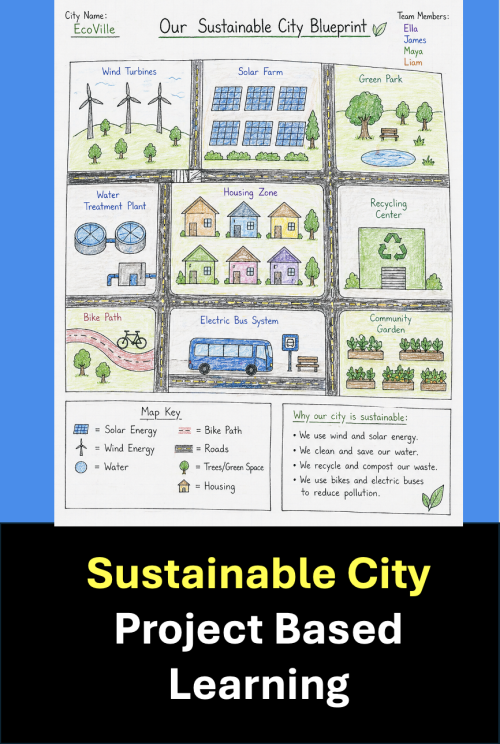
- A detailed 2D city map or blueprint
OR - A hands-on 3D sustainable city model
This makes the project easy to adapt for different classroom setups, grade levels, schedules, and materials.
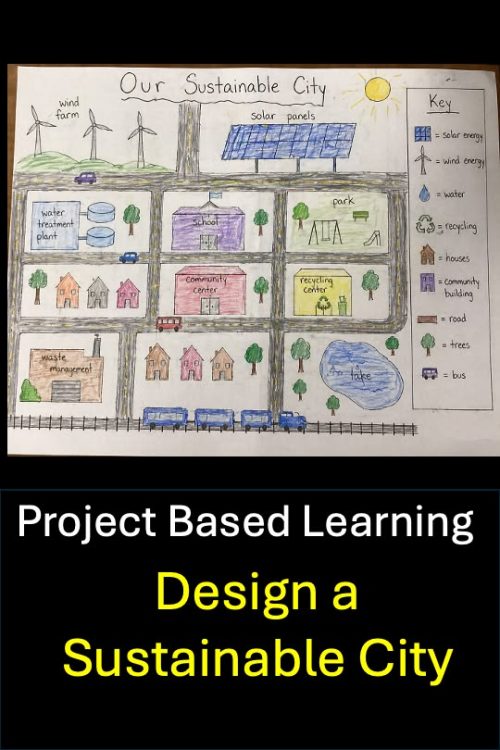
Option 1: 2D Sustainable City Map or Blueprint
Students can design a large city map that includes:
- Renewable energy sources
- Green spaces and parks
- Water conservation systems
- Recycling centers
- Eco-friendly transportation
- Sustainable housing
- Waste management solutions
This option works especially well for:
- Upper elementary classrooms
- Middle school science
- Limited classroom space
- Independent projects
- Easy grading and display
- Shorter project timelines
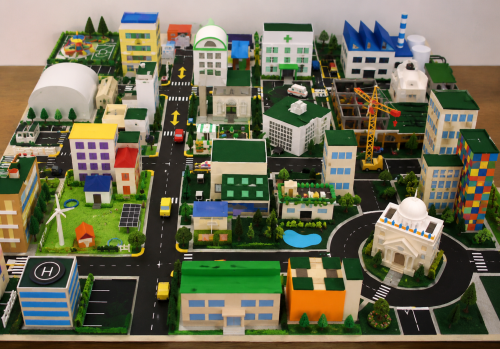
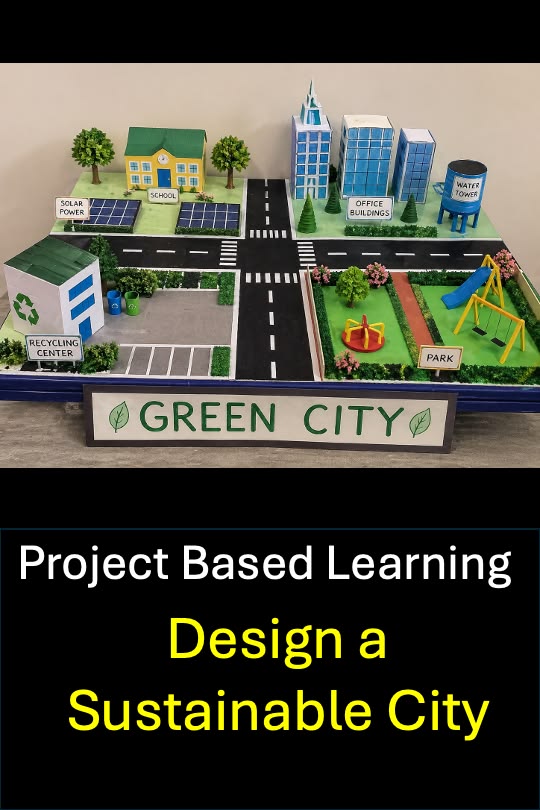
Option 2: 3D Sustainable City STEM Project
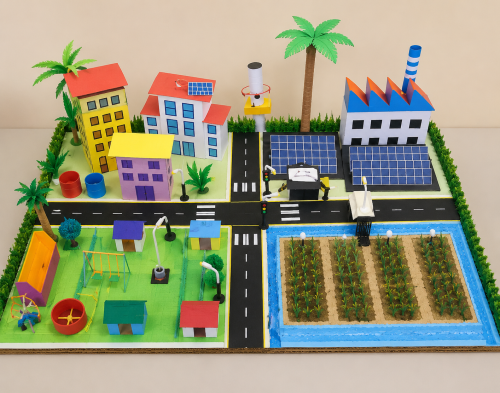
Teachers can also turn the activity into a collaborative STEM engineering challenge by having students build a 3D city using:
- Cardboard
- Recycled materials
- LEGO bricks
- Craft supplies
- Clay
- Boxes and containers
This option is perfect for:
- STEM classrooms
- Engineering design units
- Group collaboration
- Hands-on learning
- End-of-year showcases
- Interactive classroom displays
Giving teachers the choice between 2D and 3D makes this resource much easier to implement in a variety of classrooms.
Real-World Environmental Science Connections
One reason students enjoy this project so much is because it connects directly to real-world problems.
Students must think about questions such as:
- How can cities reduce pollution?
- How can renewable energy help the environment?
- How should cities manage waste?
- How can transportation become more sustainable?
- How can cities conserve water?
- How can communities protect natural habitats?
These are the same types of challenges faced by real environmental engineers, scientists, and city planners.
Students begin to see how science can improve communities and solve environmental problems.
Encourages STEM Skills and Critical Thinking
This environmental sustainability project naturally builds:
- STEM skills
- Engineering design thinking
- Problem-solving
- Collaboration
- Communication
- Creativity
- Systems thinking
- Cause-and-effect reasoning
Students quickly realize that every city decision impacts something else. Adding roads may improve transportation but increase pollution. More factories may create jobs but reduce air quality. These trade-offs lead to rich classroom discussions and deeper learning.
Easy to Differentiate for Different Learners
Another reason teachers love project-based learning is flexibility.
This resource can easily be adapted for:
- Independent work
- Partner projects
- Small groups
- Advanced learners
- Upper elementary science
- Middle school science
Teachers can also extend the project with:
- CER writing
- Presentations
- Budgets and cost analysis
- Persuasive writing
- STEM design challenges
- Environmental impact discussions
A High-Engagement Science Project Students Remember
One of the best parts of this activity is the level of student engagement.
Students become invested in their city designs and excited to explain how their ideas help the environment. The classroom becomes filled with collaboration, creativity, discussion, and problem-solving.
Whether teachers choose the 2D map version or the 3D model version, students are actively applying science concepts in a meaningful and memorable way.
If you are looking for an engaging science PBL activity, environmental sustainability project, STEM challenge, or end-of-year science project, this sustainable city resource is a fantastic addition to your classroom.

About the Author
Lynda R. Williams is an experienced science and STEM educator with more than 34 years in education. She holds a K–12 teaching license and a master’s degree in Curriculum and Instruction. Lynda has taught elementary students and future educators in university Science Methods courses.
She creates practical, standards-based resources that help upper-elementary and middle school teachers make science instruction engaging, meaningful, and manageable. Her areas of expertise include science phenomena, graph and data analysis, STEM engineering, inquiry-based learning, Claim-Evidence-Reasoning, NGSS, and Utah SEEd standards.
Lynda has presented her research on interactive notebooks at professional conferences, received multiple awards for her work, and was honored with a Faculty Excellence Award from Utah Valley University.
Learn more about Lynda R. Williams and her experience in science and STEM education.