Science bell ringers are short activities students complete at the beginning of class. They help students settle in, review important science concepts, practice academic skills, and prepare for the day’s lesson.
A strong science bell ringer should be purposeful, brief, and easy to begin independently. It may ask students to analyze a graph, observe a phenomenon, recall a previously taught concept, interpret data, or explain scientific reasoning.
When bell ringers are used consistently, the first few minutes of class become productive learning time instead of transition time.
What Is a Science Bell Ringer?
A science bell ringer is a short task students begin as soon as class starts.
Bell ringers are also sometimes called:
- Warm-ups
- Do-nows
- Daily starters
- Entry tasks
- Morning work
- Science starters
A science bell ringer may include:
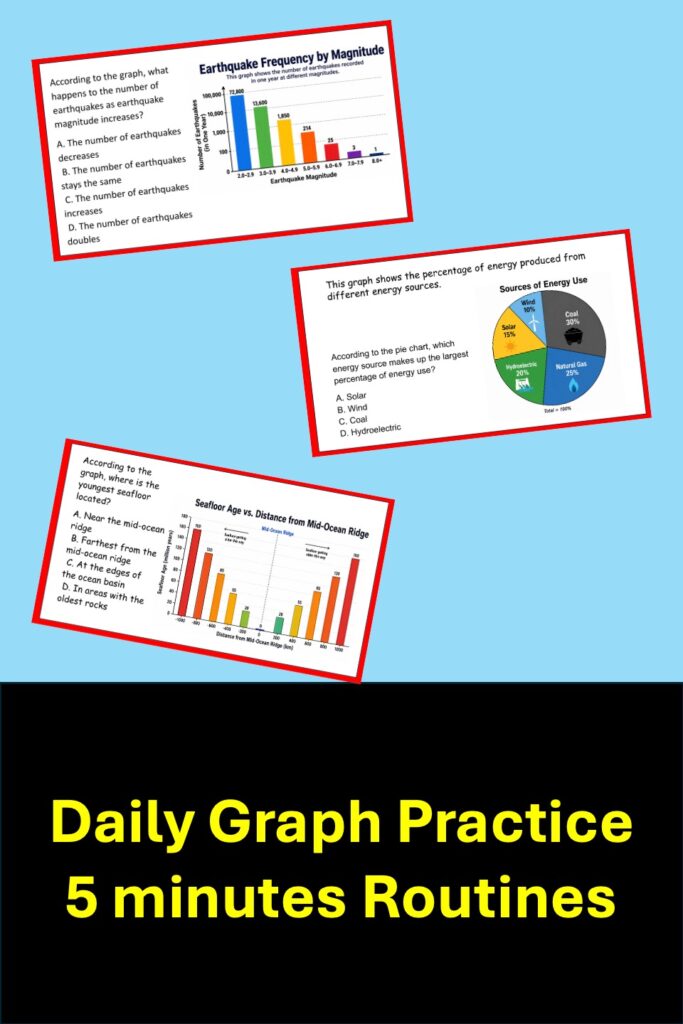
- A graph to analyze
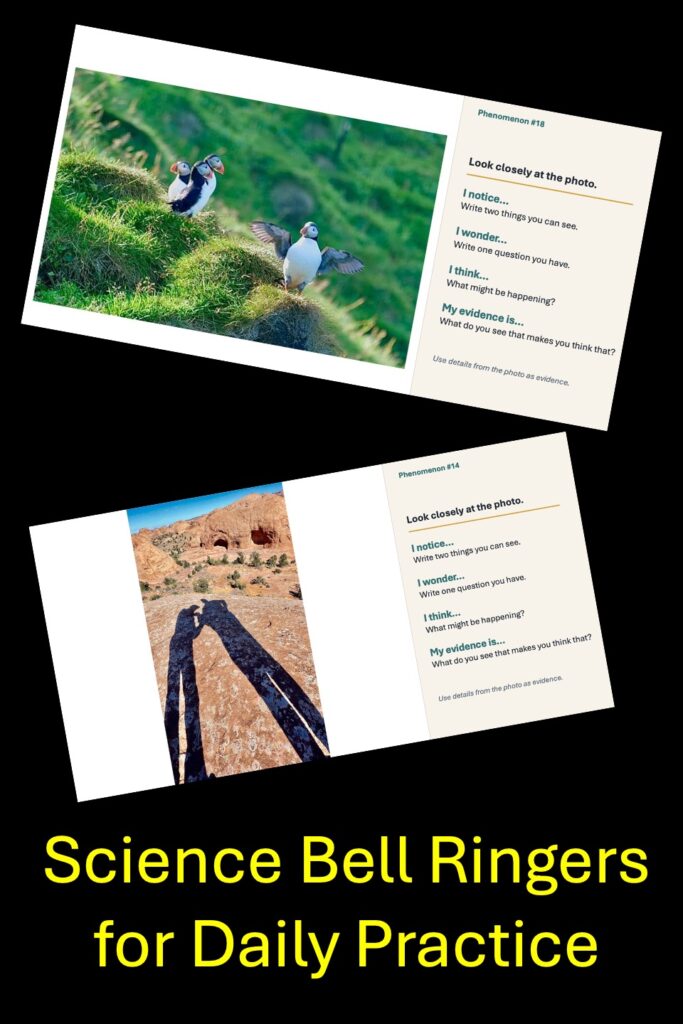
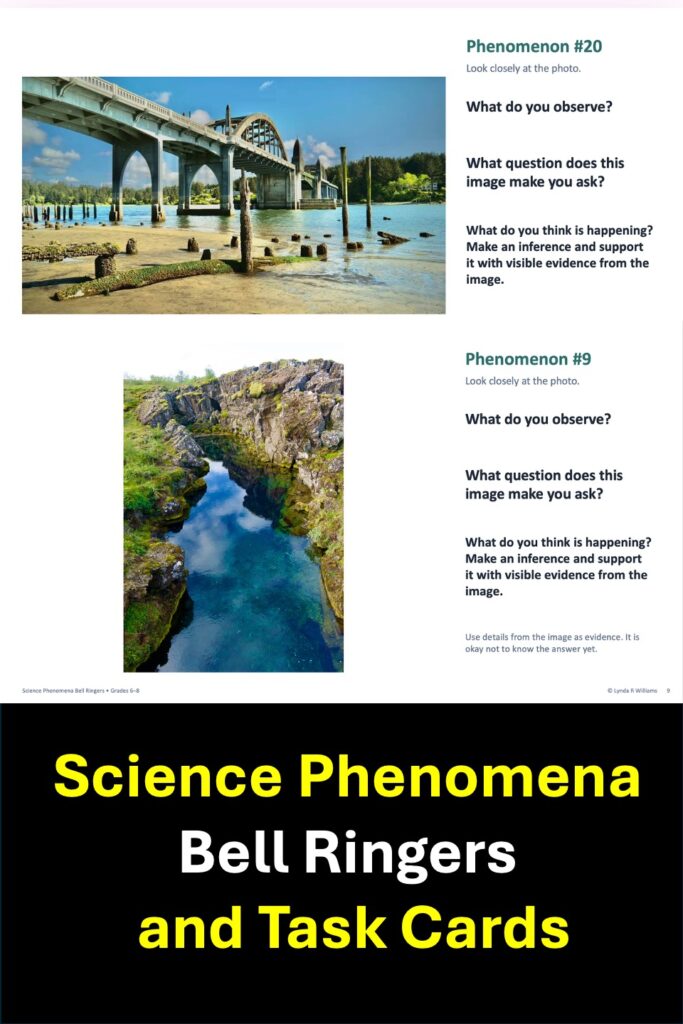
- A science phenomenon to observe
- A data table to interpret
- A review question
- A diagram to label or explain
- A photograph with a notice-and-wonder prompt
- A short Claim, Evidence, and Reasoning question
- A test-style multiple-choice question
The purpose is not simply to keep students busy. A good bell ringer gives students a clear academic task while helping the teacher create a calm, predictable start to class.
How Long Should a Science Bell Ringer Take?
A science bell ringer should usually take about three to seven minutes.
Five minutes is often a practical target because it is long enough for students to think but short enough to protect the main lesson.
The ideal length depends on the purpose.
| Bell Ringer Type | Suggested Time | Best Use |
|---|---|---|
| One recall question | 2–3 minutes | Quick review of prior learning |
| Graph or data question | 4–6 minutes | Data-analysis practice |
| Science phenomenon prompt | 4–7 minutes | Observation and discussion |
| Short written explanation | 5–8 minutes | Scientific reasoning |
| State-test practice question | 4–6 minutes | Assessment preparation |
| Full CER response | 10 minutes or more | Occasional extended practice |
A bell ringer becomes less effective when it regularly takes so long that it replaces the lesson.
The goal is to begin learning quickly, not to create an additional full assignment every day.
What Should Students Do During the First Five Minutes of Science Class?
During the first five minutes of science class, students should begin a predictable academic routine.
A simple routine might be:
- Enter the classroom.
- Pick up any needed materials.
- Sit in the assigned seat.
- Begin the displayed bell ringer.
- Work independently until the teacher begins the review.
- Make corrections or add ideas during discussion.
When students know exactly what to do, fewer verbal directions are needed.
The teacher can use this time to:
- Take attendance
- Check in with students
- Prepare laboratory materials
- Distribute supplies
- Handle brief administrative tasks
- Identify students who may need support
The first few minutes of class often determine the tone of the entire period. A clear bell-ringer routine helps students transition into science learning immediately.
How Do Bell Ringers Improve Classroom Management?
Bell ringers improve classroom management by reducing unstructured time.
Without a clear starting task, students may enter the room, talk, move around, ask repeated questions, or wait for the teacher to direct them.
A consistent bell-ringer routine gives students an immediate purpose.
Bell ringers can help:
- Reduce off-task behavior
- Create a calm beginning
- Limit repeated directions
- Establish predictable procedures
- Improve transitions
- Encourage student independence
- Give the teacher time to prepare
- Focus attention on science
The routine works best when students see it as a regular part of class rather than an occasional extra assignment.
Consistency matters more than complexity.
What Makes a Good Science Warm-Up?
A good science warm-up is brief, focused, accessible, and connected to learning.
It should be possible for students to begin without a long explanation.
Effective science warm-ups often have these characteristics:
They Have a Clear Purpose
The task should review, preview, assess, or strengthen a specific skill.
For example, a graph bell ringer may review ecosystems while also building data-analysis skills.
They Can Be Started Independently
Students should not need the teacher to explain every direction.
Clear formatting, familiar question types, and consistent routines make independent work easier.
They Require Thinking
A good bell ringer is more than copying a definition.
Students might compare evidence, notice a pattern, make a prediction, recall prior knowledge, or explain an observation.
They Are Appropriately Challenging
The task should be challenging enough to be meaningful but not so difficult that students cannot begin.
They Connect to Science
Science bell ringers should build content knowledge, scientific reasoning, or science and engineering skills.
They Can Be Reviewed Efficiently
The teacher should be able to review the most important idea without spending half the class period on corrections.
What Are the Best Types of Science Bell Ringers?
Different bell-ringer formats serve different instructional goals.
| Bell Ringer Format | Student Skill | Example |
|---|---|---|
| Graph analysis | Interpret data and patterns | What trend is shown in the population graph? |
| Phenomenon observation | Observe and ask questions | Why might water form on the outside of a cold cup? |
| Retrieval question | Recall prior learning | What is the role of decomposers in an ecosystem? |
| Data table | Compare measurements | Which trial produced the greatest temperature change? |
| Diagram analysis | Interpret models | Which arrow represents energy transfer? |
| CER prompt | Use evidence and reasoning | Which data best supports the claim? |
| Error analysis | Identify misconceptions | What is incorrect about this student explanation? |
| State-test practice | Apply content and reasoning | Which conclusion is best supported by the graph? |
Using a variety of formats keeps the routine interesting while helping students practice different kinds of scientific thinking.
Are Bell Ringers Good for Retrieval Practice?
Yes. Bell ringers can be an effective form of retrieval practice when students are asked to recall previously learned information without immediately looking at notes.
Retrieval practice helps students bring knowledge back to mind.
A retrieval-based bell ringer might ask students to:
- Define a previously taught term
- Explain a process from memory
- List the steps of an investigation
- Compare two concepts
- Draw and label a model
- Answer a question from an earlier unit
- Identify the evidence that supports a claim
The goal is not to surprise students with forgotten information. The goal is to strengthen access to important knowledge over time.
A good retrieval schedule includes questions from:
- Yesterday’s lesson
- Earlier in the week
- A previous unit
- A skill students will need again
This type of spaced review helps students retain science content instead of forgetting it immediately after a test.
How Can Bell Ringers Build Data-Analysis Skills?
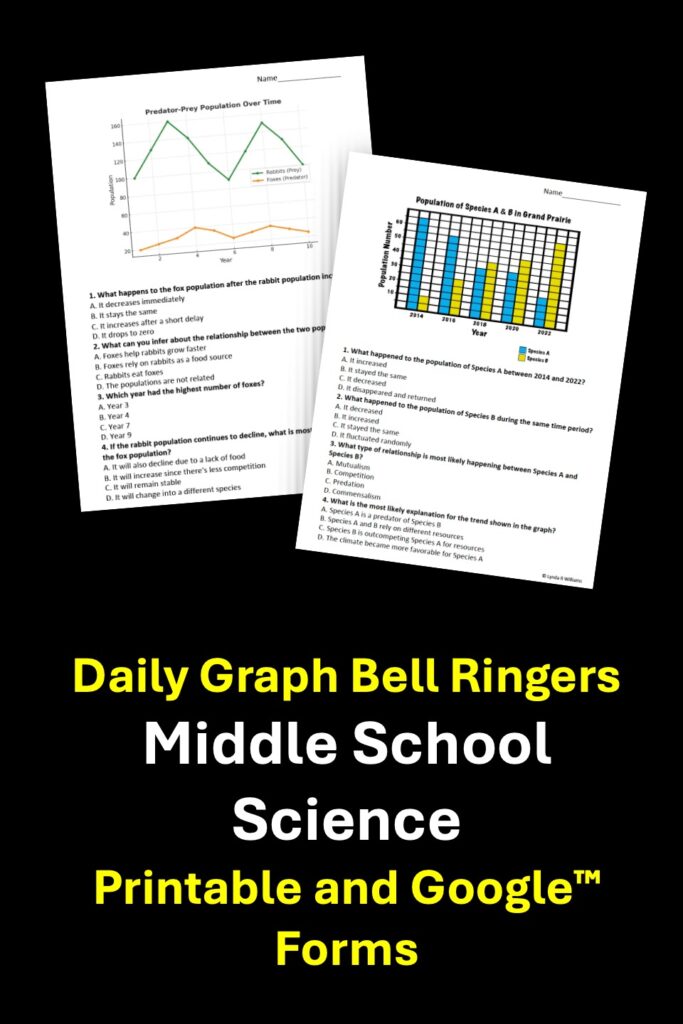
Graph bell ringers are especially useful because they combine science content with data literacy.
Students can practice:
- Reading titles
- Identifying variables
- Interpreting axes
- Reading scales
- Comparing values
- Identifying patterns
- Recognizing trends
- Using data as evidence
- Drawing conclusions
Short, repeated graph practice helps students become more comfortable with unfamiliar data displays.
A graph bell ringer might ask:
- What is the highest value?
- What pattern is shown?
- Which data supports the conclusion?
- What scientific idea might explain the pattern?
These questions move students beyond locating a single answer.
How Can Phenomena Be Used as Bell Ringers?
A phenomenon bell ringer gives students an observable event to examine and explain.
The phenomenon may be presented through:
- A photograph
- A short video
- A demonstration
- A graph
- A data set
- A brief description
- A real object
Students might respond to prompts such as:
- What do you notice?
- What do you wonder?
- What pattern do you see?
- What might have caused this?
- What evidence would help explain it?
- Which science concept may be involved?
Phenomena bell ringers are useful for introducing lessons, activating prior knowledge, and encouraging scientific curiosity.
They can also lead naturally into class discussion, investigation, modeling, or CER writing.
[Add link to phenomena bell ringers]
Should Bell Ringers Be Graded?
Bell ringers do not always need to receive a traditional grade.
The best grading method depends on the purpose.
If the main goal is practice, participation, retrieval, or discussion, a completion check may be enough.
Possible approaches include:
- Completion points
- Weekly participation checks
- Self-correction
- Partner checking
- Random collection
- Occasional accuracy grades
- Notebook checks
- No grade, but active review
A simple system can reduce teacher workload while still encouraging participation.
For example, students might earn one point for completing the bell ringer before the review begins.
The teacher could then collect one response each week for a closer look.
Bell ringers should not become a grading burden. Their greatest value is in the thinking, discussion, correction, and repeated practice they provide.
How Do You Review Bell Ringers Without Losing Instructional Time?
Bell-ringer review should be short and focused.
A review of two to five minutes is usually enough.
Try these strategies:
Display the Correct Answer
Show the answer and ask students to make corrections.
Ask for One Explanation
Choose one student to explain the reasoning rather than calling on many students to repeat the same answer.
Use Turn and Talk
Have students compare answers with a partner before a brief whole-class discussion.
Focus on the Hardest Question
Skip over obvious answers and discuss the question that reveals the most important misconception.
Use Hand Signals
Students can show a multiple-choice answer with fingers or response cards.
Ask for Evidence
Instead of asking only, “What is the answer?” ask:
What evidence supports that answer?
Review Several Bell Ringers Together
Students can complete short daily tasks and review the week’s most important ideas on Friday.
The review should reinforce thinking, not turn every bell ringer into a lengthy lesson.
What Is the Difference Between a Bell Ringer, Warm-Up, and Exit Ticket?
Bell ringer and warm-up are often used interchangeably, but an exit ticket has a different purpose.
| Activity | When It Is Used | Main Purpose |
|---|---|---|
| Bell ringer | At the beginning of class | Start work immediately and establish a routine |
| Warm-up | At the beginning of class | Activate prior knowledge or prepare for learning |
| Do-now | At the beginning of class | Give students an independent task to begin immediately |
| Entry task | At the beginning of class | Prepare students for the lesson |
| Exit ticket | At the end of class | Check understanding after instruction |
A bell ringer may also serve as a warm-up or entry task.
The term matters less than the purpose.
At the beginning of class, the task should prepare students to learn. At the end of class, the task should help the teacher determine what students understood.
Should Bell Ringers Review Old Content or Preview New Content?
They can do both.
A balanced bell-ringer routine may include:
- Review of yesterday’s lesson
- Retrieval from an older unit
- Practice with an ongoing skill
- Preview of the day’s lesson
- Analysis of a new phenomenon
- State-assessment practice
- Vocabulary in context
Teachers do not need to use the same purpose every day.
For example:
| Day | Bell Ringer Focus |
|---|---|
| Monday | Retrieve content from the previous week |
| Tuesday | Analyze a science graph |
| Wednesday | Observe a phenomenon |
| Thursday | Practice a state-test-style question |
| Friday | Reflect, explain, or correct misconceptions |
This type of routine provides variety while maintaining consistency.
How Can Bell Ringers Prepare Students for State Science Tests?
Bell ringers can prepare students for state science tests by giving them regular practice with the types of thinking required on assessments.
Students may need to:
- Analyze graphs and tables
- Interpret models
- Identify patterns
- Compare evidence
- Evaluate claims
- Read short scientific passages
- Apply content in unfamiliar situations
- Choose conclusions supported by data
- Explain scientific reasoning
Short daily practice can make these tasks feel familiar.
State-specific bell ringers are especially useful because they can connect data analysis and reasoning skills to grade-level state standards.
They may also help teachers identify gaps before testing.
The goal should not be to spend the year drilling isolated test questions. Instead, bell ringers should strengthen the scientific thinking students need for both assessments and authentic science learning.
Why Use State-Specific Science Bell Ringers?
State science standards do not always follow the same sequence or include exactly the same content.
State-specific bell ringers help teachers review the concepts students are expected to know at a particular grade level.
They can support:
- Standards review
- Spiral review
- Formative assessment
- State-test preparation
- Vocabulary in context
- Data analysis
- Science and engineering practices
Because the content is aligned to the state, teachers can use the warm-ups throughout the year instead of waiting until the final weeks before testing.
Utah SEEd 6th Grade Science Bell Ringers
How Can Seasonal Graph Bell Ringers Support Review?
Seasonal graph bell ringers combine timely topics with academic practice.
Examples might include graphs about:
- Fall temperatures
- Animal migration
- Winter weather
- Holiday energy use
- Spring rainfall
- Plant growth
- Summer daylight
- Seasonal populations
Seasonal topics can make the practice feel fresh while students continue working on the same important graph-analysis skills.
These activities work well for:
- Short school weeks
- Holiday periods
- Review days
- Early finishers
- Substitute plans
- Seasonal science connections
The seasonal context should support the science and data skills rather than distract from them.
Fall Science Graphs – Daily Bell Ringers
How Can Daily Warm-Up Bundles Save Teachers Time?
Daily warm-up bundles provide a ready-to-use routine for an extended period of time.
A bundle may include:
- Graph analysis
- Phenomena
- Vocabulary
- Retrieval practice
- Data tables
- State-aligned review
- Scientific reasoning
- Multiple-choice questions
- Short written responses
Using a bundle can help teachers avoid creating a new task each morning.
It can also improve consistency because the activities follow a familiar structure and level of difficulty.
Daily warm-up bundles are particularly helpful for teachers who want:
- A complete semester or year of practice
- A consistent routine
- Standards-based review
- Low-prep materials
- Variety in question format
- Printable and digital options
How Do Bell Ringers Support Formative Assessment?
Bell ringers give teachers quick information about what students know.
A bell ringer can reveal:
- Whether students remember an important concept
- Whether they can apply vocabulary
- Whether they can read a graph accurately
- Whether they recognize a pattern
- Whether they can support an answer with evidence
- Which misconceptions are still present
Teachers can use this information to adjust instruction.
For example:
- If most students misread the scale, review graph scales before moving on.
- If students choose the correct answer but cannot explain it, add more reasoning practice.
- If students remember vocabulary but cannot apply it, use more contextual questions.
- If students struggle with an earlier standard, include it again in future warm-ups.
Bell ringers are valuable because they provide frequent feedback without requiring a formal quiz.
How Do You Introduce a Bell-Ringer Routine?
Teach the routine explicitly.
Do not assume students automatically know what to do.
During the first week, explain:
- Where the bell ringer will be displayed
- Where students should record answers
- How long they will have
- Whether they may use notes
- How responses will be reviewed
- Whether the work will be graded
- What to do when finished
Then practice the routine.
You may also display simple directions:
Enter quietly.
Take out your science notebook.
Begin the bell ringer.
Work independently.
Be ready to discuss your answer.
Once the routine becomes familiar, students should be able to begin with very little teacher direction.
Common Bell-Ringer Mistakes to Avoid
Making the Task Too Long
A bell ringer should not regularly consume a large part of the class period.
Using Only Recall Questions
Recall is valuable, but students also need opportunities to analyze, compare, interpret, and explain.
Grading Every Response in Detail
This can create more work than the routine is worth.
Reviewing Every Question for Too Long
Focus on the most important reasoning or misconception.
Using Content Students Have Never Seen
A preview question should invite observation or prediction, not require knowledge students have not yet learned.
Changing the Routine Constantly
Variety in content is helpful. Variety in procedures can create confusion.
Using Bell Ringers as Busywork
Students are more likely to take the routine seriously when the task clearly supports their learning.
A Simple Weekly Science Bell-Ringer Plan
A weekly plan can combine content review, data analysis, phenomena, and assessment practice.
| Day | Bell Ringer | Main Purpose |
|---|---|---|
| Monday | Retrieval question | Recall previously learned content |
| Tuesday | Graph analysis | Practice data interpretation |
| Wednesday | Science phenomenon | Observe, question, and explain |
| Thursday | State-style question | Apply content and reasoning |
| Friday | Error analysis or reflection | Correct misconceptions and summarize learning |
This plan can be adjusted for different grade levels and science units.
The key is to keep the routine predictable while varying the type of thinking students do.
Final Thoughts
Science bell ringers turn the first few minutes of class into meaningful learning time.
The best bell ringers are short, purposeful, easy to begin independently, and connected to important science content or skills.
They can help students:
- Recall prior learning
- Analyze graphs
- Observe phenomena
- Use evidence
- Practice scientific reasoning
- Prepare for assessments
- Develop stronger classroom routines
Bell ringers also give teachers a practical way to spiral review throughout the year.
A few focused minutes each day can build confidence, reveal misconceptions, and strengthen students’ ability to think like scientists.
Frequently Asked Questions About Science Bell Ringers
What is a science bell ringer?
A science bell ringer is a brief academic task students complete at the beginning of class. It may review science content, introduce a phenomenon, build graph-analysis skills, or prepare students for the lesson.
How long should a bell ringer take?
Most science bell ringers should take about three to seven minutes. Five minutes is a practical goal for many classrooms.
Should bell ringers be graded?
Bell ringers can be graded for completion, checked occasionally for accuracy, or used without a formal grade. The grading system should be simple and should not create excessive teacher workload.
What makes a good science warm-up?
A good science warm-up is brief, purposeful, grade appropriate, easy to begin independently, and connected to science content or scientific reasoning.
Are bell ringers good for retrieval practice?
Yes. Bell ringers can help students recall information from previous lessons and units, especially when questions are spaced across time.
How do bell ringers improve classroom management?
Bell ringers reduce unstructured time by giving students a predictable task to begin as soon as they enter the classroom.
What is the difference between a bell ringer and an exit ticket?
A bell ringer is completed at the beginning of class to activate or review learning. An exit ticket is completed at the end of class to assess understanding after instruction.
How can bell ringers prepare students for state science tests?
Bell ringers can provide regular practice with graphs, data tables, models, evidence, scientific passages, and test-style reasoning questions.
About the Author
Lynda R. Williams is an experienced science educator, curriculum writer, and former university science-methods instructor. She creates practical science resources for grades 5 through 8 that help teachers build strong classroom routines, scientific reasoning, data literacy, and standards-based understanding.