The first month of science class sets the tone for the entire year. Before students can confidently explain phenomena, analyze data, design investigations, or write evidence-based responses, they need routines, shared expectations, and repeated practice with the skills scientists use every day.
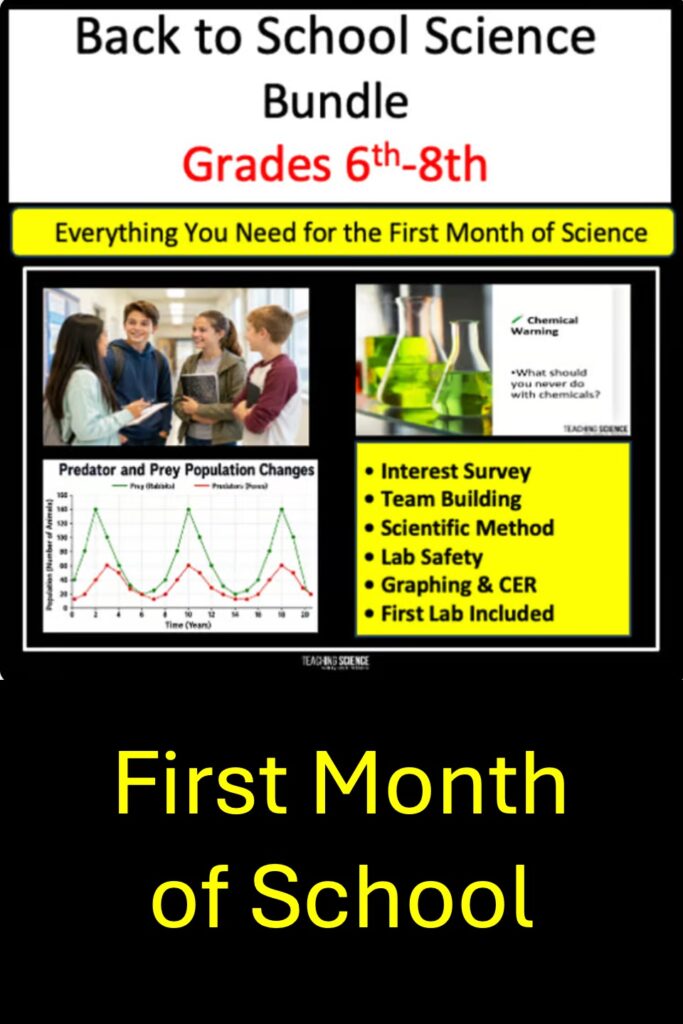
So, what should you teach during the first month of science?
During the first month of science, teachers should focus on classroom routines, lab safety, graph analysis, scientific thinking, experimental design, CER writing, and phenomena-based questioning. This gives students a strong foundation before moving deeply into grade-level science content.
Instead of rushing straight into the first major unit, the first few weeks are the perfect time to teach students how science class works.
They need to know how to observe carefully.
They need to know how to ask questions.
They need to know how to work with data.
They need to know how to support answers with evidence.
And most importantly, they need to see themselves as scientists.
Why the First Month of Science Matters
The first month of science is more than “back-to-school” time. It is when students learn the habits and routines they will use all year long.
This is the time to teach students how to:
- Enter class and begin a bell ringer
- Work safely during labs and investigations
- Read and interpret graphs
- Ask testable scientific questions
- Identify variables
- Make observations
- Use evidence from data
- Write CER responses
- Participate in phenomena-based discussions
- Work respectfully with science partners and groups
When these skills are taught early, everything else becomes easier. Labs run more smoothly. Discussions are more productive. Students understand what it means to use evidence. Graphs and data do not feel like an extra challenge because students have already practiced them from the beginning.
First Month of Science Pacing Chart
Use this chart as a flexible guide for planning the first four weeks of science. You can adjust the timing depending on your schedule, grade level, and whether you teach elementary science, middle school science, or multiple classes.
| Week | Main Focus | What to Teach | Helpful Activities |
|---|---|---|---|
| Week 1 | Science routines and student identity | Classroom expectations, science notebook setup, bell ringer routines, partner talk, what scientists do | Science interest inventory, All About Me science poster, Draw Yourself as a Scientist, classroom routines practice |
| Week 2 | Lab safety and observation skills | Lab safety rules, emergency equipment, safe behavior, qualitative and quantitative observations | Lab safety scavenger hunt, safety scenarios, observation stations, simple measurement activities |
| Week 3 | Graphs, data, and evidence | Reading axes, identifying trends, comparing data, using data as evidence | Graph analysis bell ringers, graph boot camp, data task cards, short graph-based questions |
| Week 4 | Scientific method, experimental design, and CER | Testable questions, variables, hypotheses, fair tests, claims, evidence, reasoning | Paper airplane investigation, variables practice, CER mini-lessons, phenomena-based writing prompts |
Week 1: Start With Science Routines and Student Identity
The first week of science should help students understand how science class will feel, sound, and work.
Before starting content-heavy lessons, teach the routines students will use every day. This includes how to complete a bell ringer, where to find materials, how to work with partners, how to use science notebooks, and how to transition into labs or stations.
This is also a great time to help students see themselves as scientists.
Many students think scientists are only people in lab coats who work in laboratories. The first week is a chance to expand that idea. Scientists ask questions, observe patterns, collect data, build models, test ideas, and use evidence. Students can do those things too.
Great first-week activities include:
- Science interest inventory
- All About Me science poster
- Draw Yourself as a Scientist activity
- Science notebook setup
- Classroom routines practice
- Team-building challenges
- Short phenomena discussion
A strong first week should answer this question for students: “What does it mean to be a scientist in this classroom?”
Week 2: Teach Lab Safety Before Labs Begin
Lab safety should be taught before students complete any hands-on investigation. Even if students have heard lab safety rules before, they need to practice what those rules look like in your classroom.
During the first month, students should learn:
- When to wear goggles
- How to handle glassware and materials
- What to do if something spills
- How to respond to broken glass
- Where safety equipment is located
- Why directions must be followed carefully
- How to clean up materials correctly
- How to move safely during labs and stations
Lab safety works best when students do more than copy rules. Use scenarios, pictures, stations, or a scavenger hunt so students can decide what is safe and unsafe.
For example, students can look at a lab scene and answer questions like:
What is unsafe in this picture?
What should the student do next?
Which safety rule is most important in this situation?
This helps students apply lab safety instead of simply memorizing it.
Week 3: Build Graph Analysis and Data Literacy
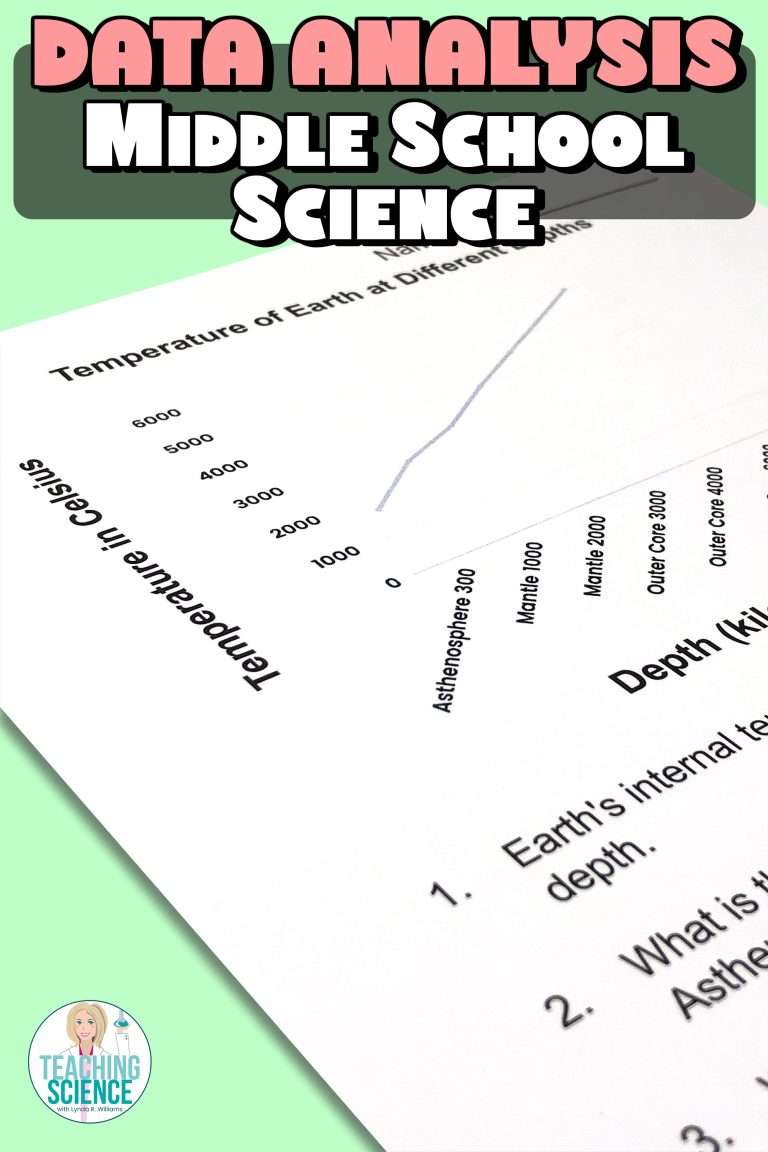
Graph analysis is one of the most important science skills to teach during the first month. Students will see graphs in labs, assessments, state tests, science articles, and data-based questions all year long.
If students struggle with graphs, they often struggle to explain science ideas even when they understand the concept. That is why graph practice should begin early.
During the first month, teach students how to:
- Read the title of a graph
- Identify the x-axis and y-axis
- Understand units
- Compare categories
- Identify increases and decreases
- Notice patterns and trends
- Use numbers from a graph as evidence
- Avoid making claims that are not supported by the data
Graph bell ringers are especially helpful because they give students short, repeated practice. A graph does not need to take an entire class period. Even five minutes a day can build confidence.
For example, students might answer:
What trend do you notice in the data?
Which category has the highest value?
What evidence from the graph supports your answer?
What conclusion can you make from this data?
This type of daily practice prepares students for CER writing, labs, and science assessments.
Week 4: Teach Scientific Method and Experimental Design
The scientific method is still useful, but students also need to understand that real science is not always a perfect set of steps. Instead of teaching the scientific method as a rigid checklist, focus on the thinking behind investigations.
Students should learn how to:
- Ask testable questions
- Write hypotheses
- Identify independent and dependent variables
- Recognize constants and controls
- Plan a fair test
- Collect data
- Analyze results
- Use evidence to support a conclusion
One of the best ways to teach experimental design is through a simple investigation. A paper airplane investigation works well because it is easy to set up, engaging for students, and full of opportunities to discuss variables, trials, measurement, averages, and data.
For example, students can test how different airplane designs affect flight distance. They can measure each trial, calculate averages, create a graph, and write a conclusion using evidence from their data.
This type of investigation gives students a shared experience that you can refer back to all year.
Include CER Writing Early
CER stands for Claim, Evidence, and Reasoning. It is one of the most important writing structures in science because it teaches students to explain their thinking with evidence.
During the first month, students do not need long, complicated CER responses. Start small.
A beginner CER might look like this:
Claim: The plant grew best with 6 hours of light.
Evidence: The graph shows that the plant with 6 hours of light grew 18 cm, which was taller than the plants with 2 or 4 hours of light.
Reasoning: This shows that the amount of light affected plant growth because plants need light for photosynthesis.
The key is to teach students that evidence must come from the data, graph, text, model, or investigation. Many students confuse evidence with opinion. The first month is the perfect time to practice that difference.
Use Phenomena to Spark Scientific Thinking
A science phenomenon is an observable event that students can wonder about, investigate, or explain. Phenomena help students think like scientists because they begin with curiosity instead of vocabulary.
A phenomenon can be:
- A photo
- A short video
- A simple demonstration
- A natural event
- A graph
- A data pattern
- A surprising question
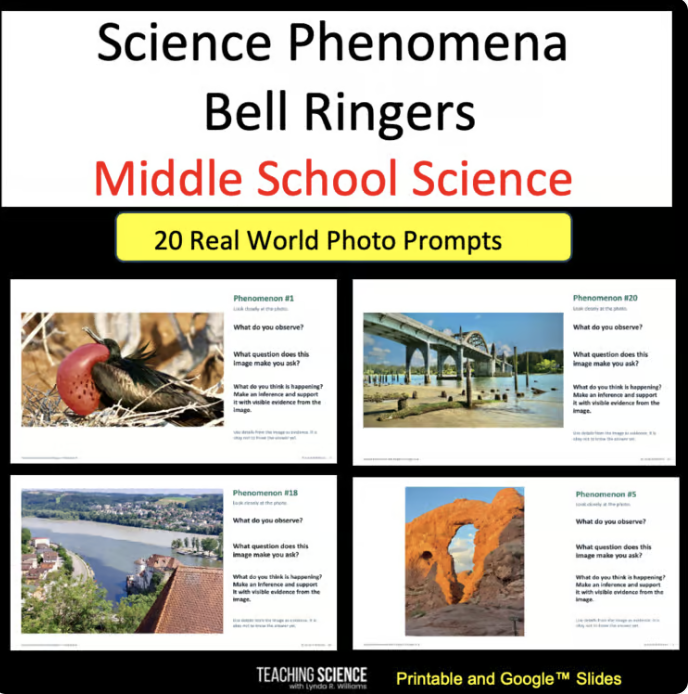
During the first month, phenomena do not need to be complicated. You can show students a picture of a cracked desert floor, a plant growing toward light, a shadow changing during the day, or an unusual animal adaptation.
Then ask:
What do you notice?
What do you wonder?
What questions could we investigate?
What evidence would help us explain this?
These questions teach students that science begins with observation and curiosity. Read more about using Science Phenomena
What Should You Teach First in Science?
The first thing to teach in science is not usually a content standard. The first thing to teach is how students will participate in science.
Start with routines, safety, observation, questioning, and data skills. Once students know how to work like scientists, they are better prepared for life science, earth science, physical science, or state-specific standards.
A strong first month helps students understand that science is not just reading from a textbook or memorizing definitions. Science is asking questions, testing ideas, analyzing evidence, and explaining the natural world.
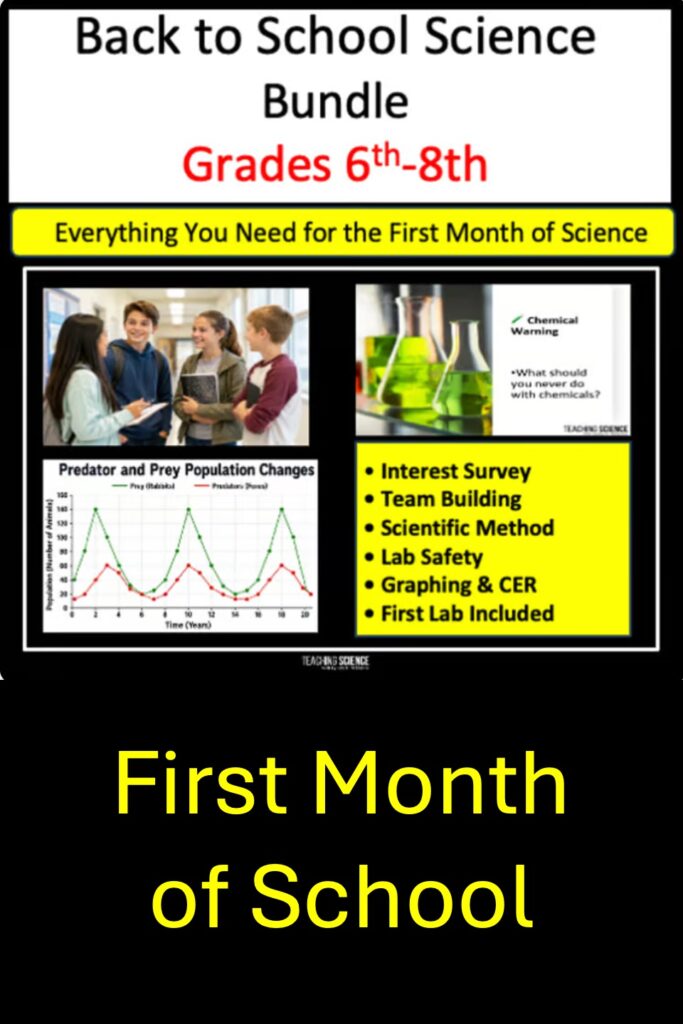
First Month of Science Activity Ideas
Here are some strong activities to include during the first month of science:
| Skill | Activity Idea | Why It Works |
|---|---|---|
| Science identity | Draw Yourself as a Scientist | Helps students see themselves as capable science thinkers |
| Classroom community | Science Interest Inventory | Helps the teacher learn about students and their interests |
| Routines | Bell ringer practice | Builds daily structure and independence |
| Lab safety | Lab safety scavenger hunt | Helps students locate and understand safety equipment |
| Observation | Mystery object observation | Builds careful noticing and descriptive language |
| Graph analysis | Graph bell ringers | Gives repeated practice with data and trends |
| Experimental design | Paper airplane investigation | Teaches variables, trials, measurement, averages, and fair tests |
| CER writing | Graph-based CER prompt | Connects data analysis with evidence-based writing |
| Phenomena | Notice and wonder discussion | Encourages curiosity and scientific questioning |
Should You Start the Year With Content or Skills?
Many teachers wonder whether they should start with their first science unit right away or spend time on science skills.
The best answer is both.
You can introduce content through skills. For example, students can analyze a graph about plant growth, observe a weather phenomenon, or complete a simple physical science investigation. This allows you to begin science content while still teaching the routines and thinking skills students need.
The first month should not feel separate from “real science.” It should feel like the foundation for real science.
Recommended First Month Science Sequence
A strong first month of science might look like this:
- Build classroom routines and science identity.
- Teach lab safety and safe investigation behavior.
- Practice observations, measurements, and science notebook expectations.
- Introduce graph analysis with short daily practice.
- Teach testable questions, variables, and fair tests.
- Complete a simple first investigation.
- Introduce CER writing using data from graphs or labs.
- Use phenomena to launch curiosity and questioning.
This sequence gives students the confidence and structure they need before moving into larger units.
Resources That Make the First Month Easier
If you want the first month of science planned for you, first-month science bundles can save a lot of time. Look for resources that include a mix of routines, graph analysis, lab safety, scientific method, CER writing, and engaging investigations.
Helpful first-month resources include:
- Back-to-school science graph analysis boot camp
- Lab safety activities
- Scientific method and experimental design lessons
- Paper airplane investigation
- CER writing mini-unit
- Phenomena bell ringers
- Science interest inventory
- All About Me science poster
- First Month of Science Skills bundle
These resources work well because they focus on skills students will use all year, not just the first week.
First Month of Science FAQ
What do you teach during the first month of science?
During the first month of science, teach classroom routines, lab safety, science notebook expectations, observation skills, graph analysis, scientific method, experimental design, CER writing, and phenomena-based questioning.
How do you start the first week of science class?
Start the first week of science with routines, student introductions, science identity activities, notebook setup, and short curiosity-based activities. The goal is to help students understand how science class works and how they will participate.
Should lab safety be taught before the first investigation?
Yes. Lab safety should be taught before students complete hands-on labs or investigations. Students need to know how to use materials safely, follow directions, respond to spills, and clean up correctly.
Why is graph analysis important at the beginning of the year?
Graph analysis is important because students use data all year in science. Teaching graph skills early helps students identify trends, compare data, and use evidence in written explanations.
What is a good first science investigation?
A paper airplane investigation is a strong first science investigation because students can test designs, measure distances, collect data, calculate averages, make graphs, and write conclusions based on evidence.
How do you introduce CER at the beginning of the year?
Introduce CER with short, simple prompts. Start with a graph, data table, or class investigation. Have students write one claim, choose one piece of evidence, and explain how the evidence supports the claim.
Should phenomena be used during the first month of science?
Yes. Phenomena are a great way to spark curiosity and help students ask scientific questions. They can be used as bell ringers, discussion starters, writing prompts, or unit introductions.
Final Thoughts
The first month of science is your chance to build the foundation for the rest of the year. When students understand routines, safety, graph analysis, experimental design, CER writing, and phenomena-based thinking, they are ready for deeper science learning.
Instead of thinking of the first month as extra time before the “real” curriculum starts, think of it as the launchpad for everything students will do next.
When students know how to observe, question, investigate, analyze data, and use evidence, they are not just learning about science.
They are learning how to think like scientists.
About Lynda
Lynda R. Williams is a science educator and curriculum creator who has taught science methods at the university level for nearly 20 years. She specializes in creating engaging, classroom-ready science resources that help students analyze data, explain phenomena, write with evidence, and build confidence as science thinkers.